- Quick Comparison: Changing Table vs. Alternatives
- Benefits of a Changing Table
- Drawbacks of a Changing Table
- The Dresser Option
- Portable Changing Mats
- What You Need for Any Changing Area
- Changing Safety Rules
- Changing Tables for Twins and Multiple Children
- Changing Stations Beyond the Nursery
- Budget and Resale Considerations
- When to Stop Using a Raised Changing Surface
- How to Decide What Is Right for You
- Related Nursery Guides
- A Practical Scenario: A Small Apartment
- Shop This Guide
- Frequently Asked Questions
- Final Thoughts: Do You Need a Changing Table?
- Free Newborn Gear Checklist
- Everything you need before baby arrives — get the free printable checklist, straight to your inbox.
As an Amazon Associate, we earn from qualifying purchases linked in this post.
Do you need a changing table? Not strictly. Many families happily change diapers on a dresser topped with a contoured changing pad, a portable changing mat on the bed or floor, or a small changing station on a bathroom counter. A dedicated changing table is helpful if you want a waist-height, organized station, have back pain, or recover from a C-section, but it is a nice-to-have rather than an essential.
Your baby will need around 2,500 diaper changes in the first year, so where you change them matters for comfort and safety. Below we compare changing tables with the most popular alternatives, list what you actually need for a safe changing area, share safety rules, and explain how to decide based on your space, budget, and body.
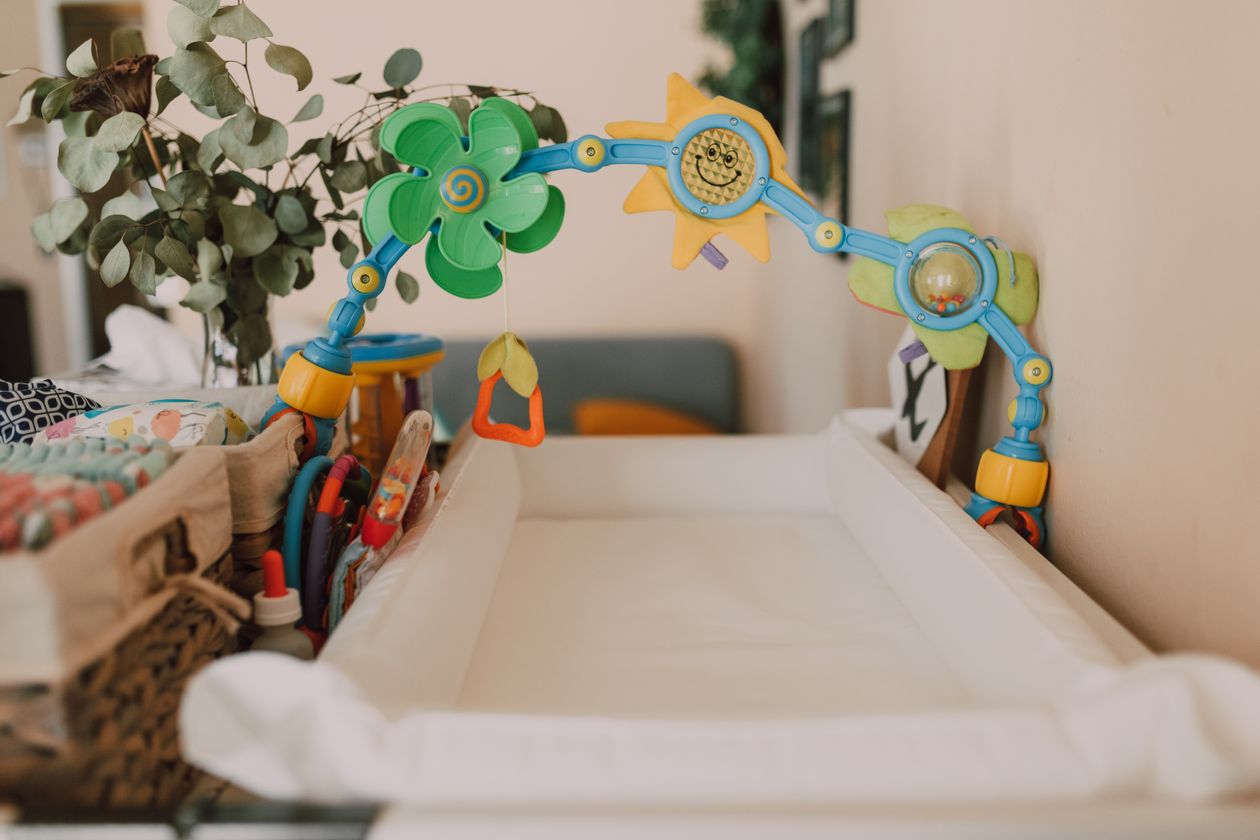
Quick Comparison: Changing Table vs. Alternatives
This table helps answer do you need a changing table by comparing common setups.
| Option | Cost | Pros | Cons |
|---|---|---|---|
| Dedicated changing table | Moderate | Waist height, built-in shelves, guardrails | Used only for a couple of years |
| Dresser with changing topper | Moderate to high | Long-lasting furniture, drawer storage | Needs a secure topper and anchoring |
| Contoured pad on a dresser | Low | Uses furniture you already own | Pad must be fastened securely |
| Portable changing mat | Very low | Works anywhere, great for travel and floors | Bending down can strain your back |
| Wall-mounted or over-crib changer | Varies | Saves floor space | Weight limits and installation needed |
Benefits of a Changing Table
- Comfortable height: reduces bending, which helps during postpartum recovery.
- Organization: shelves keep diapers, wipes, and cream within arm’s reach.
- Safety features: many have raised sides and a safety strap.
- Dedicated space: a consistent station makes night changes quicker.
Drawbacks of a Changing Table
- Short lifespan: most families stop using it once toddlers resist lying down, often around age two.
- Space: it takes up floor space in small nurseries or apartments.
- Cost: it is another piece of furniture you may later sell or store.
- Weight limits: many tables are rated for around 30 pounds.
These drawbacks are why many parents answer do you need a changing table with a firm no and choose a dresser instead.
The Dresser Option
A sturdy dresser with a contoured changing pad or a fitted changing topper is the most popular alternative. Choose a dresser that is about 36 to 43 inches tall, depending on your height, and deep enough for the pad to sit fully on the surface. Fasten the pad or topper securely according to the manufacturer’s instructions. Crucially, anchor the dresser to the wall with anti-tip hardware, because tip-overs are a serious hazard for young children. The CPSC’s Anchor It campaign explains why anchoring matters and how to do it.
Portable Changing Mats
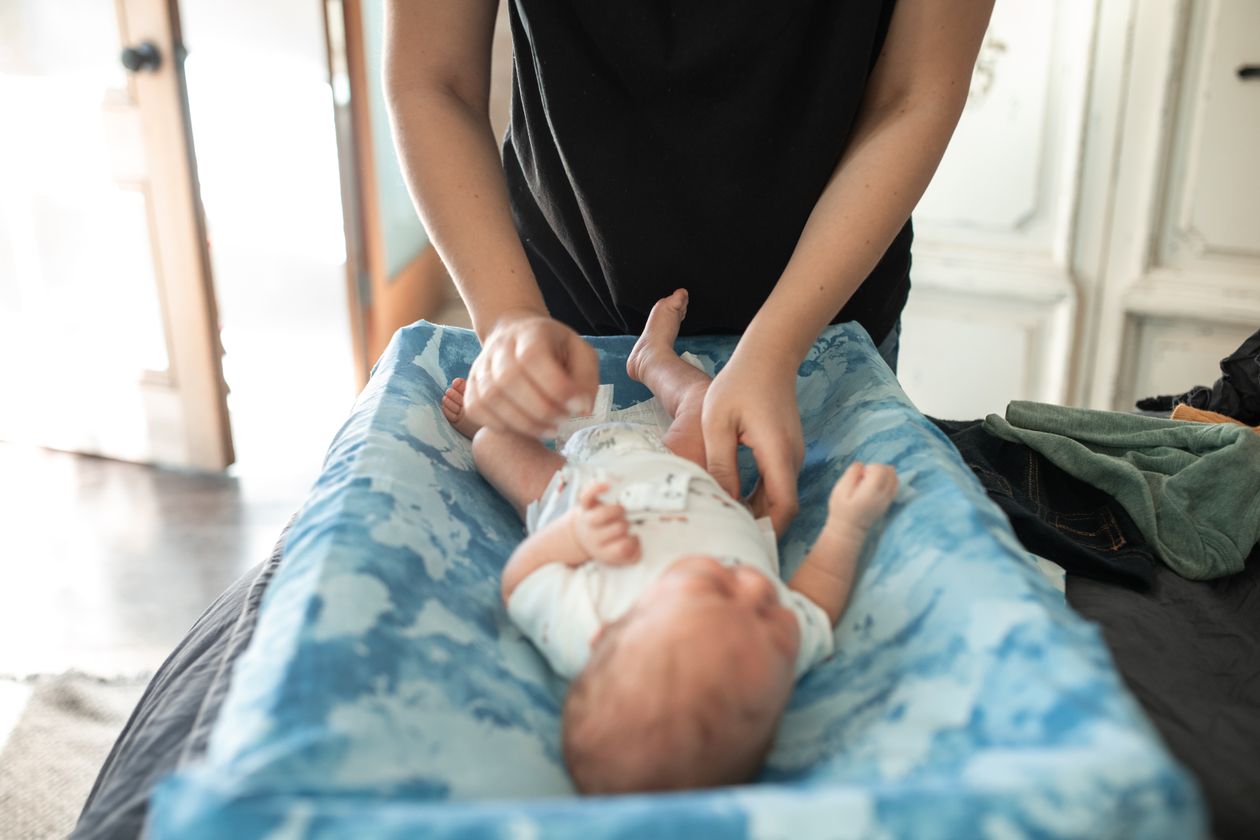
A portable changing mat is the simplest solution. Use it on the floor, the bed, or the couch, keeping one hand on your baby at all times on raised surfaces. The floor is the safest place to change a wriggly baby, since there is nowhere to fall. Portable mats are also essential for outings, often included in diaper bags. See our guide to the best diaper bag backpacks for options with built-in mats.
What You Need for Any Changing Area
- A changing pad or mat with a wipeable cover.
- Two or three pad covers to rotate through laundry.
- Diapers and wipes within reach so you never step away.
- Diaper cream and a spare outfit.
- A diaper pail or lidded bin nearby.
- A small toy or mirror to distract older babies.
Changing Safety Rules
- Never leave your baby unattended on a raised surface, even for a second.
- Keep one hand on your baby whenever they are on a table or dresser.
- Use the safety strap as a backup, not a substitute for supervision.
- Anchor furniture to prevent tip-overs.
- Keep supplies out of baby’s reach, especially creams and small items.
- Switch to the floor once your baby rolls and twists vigorously.
Changing Tables for Twins and Multiple Children
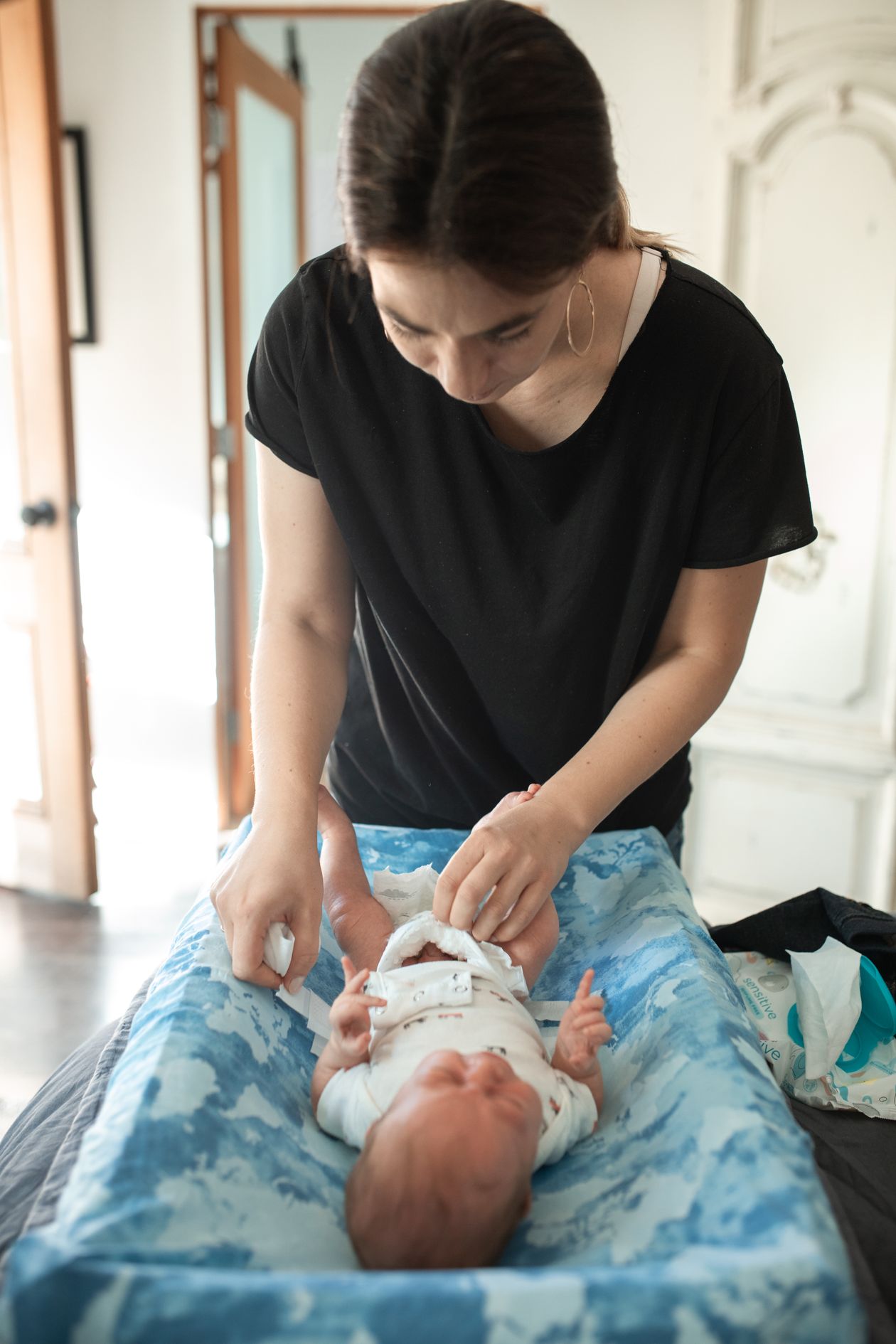
Parents of twins, or families with a toddler and a newborn at the same time, change many more diapers each day. For them, a dedicated station with lots of storage can save time and steps, and a second portable mat downstairs avoids carrying babies up and down. In this situation, do you need a changing table becomes more of a yes, simply because of volume and efficiency.
Changing Stations Beyond the Nursery
Many parents quickly discover that the nursery is not where most daytime changes happen. If your living space is on a different floor, a small basket with diapers, wipes, cream, and a portable mat in the living room saves dozens of trips each week. Some families also keep a mini station in the car. Thinking about where you will actually spend your days changes how you answer do you need a changing table, because a single fixed station may not be the most convenient choice.
Budget and Resale Considerations
Basic changing tables are relatively affordable, while combination units and high-end furniture cost more. Because changing tables are used for a short time, they are widely available secondhand. If you buy used, check that it is sturdy, has guardrails on all sides, has no recalls, and comes with all its hardware. A dresser, on the other hand, keeps its value as everyday furniture long after diapers are gone, which is why many families feel the answer to do you need a changing table is no once they compare long-term value.
When to Stop Using a Raised Changing Surface
As babies grow stronger and more mobile, changing them on a raised surface becomes harder and riskier. Many parents switch to floor changes or stand-up changes with pull-up style diapers once their child is a toddler. If your baby is rolling, twisting, or trying to crawl away during every change, it is time to move to the floor.
How to Decide What Is Right for You
Ask yourself a few questions. Do you have back problems, or are you expecting a C-section recovery? A waist-height surface helps. Is your nursery small? A dresser or wall-mounted changer saves space. Do you plan to have more children? A quality dresser lasts for years and many babies. Is your budget tight? A portable mat on the floor works perfectly well. Answering these makes do you need a changing table a simple decision.
Related Nursery Guides
Setting up the nursery? See our guides on how many crib sheets you need, how long you use a convertible crib, and whether you need a baby monitor.
A Practical Scenario: A Small Apartment
Imagine new parents in a one-bedroom apartment. They skip the changing table, buy a sturdy dresser anchored to the wall, fasten a contoured changing pad on top, and keep a portable mat in the living room for daytime changes. For them, the honest answer to do you need a changing table is no, because the dresser does the job and stays useful for years.
Shop This Guide
If you decide this gear is right for your family, these links show current options and prices. Check reviews, age and weight limits, and recall status before you buy.
As an Amazon Associate, we earn from qualifying purchases at no extra cost to you.
Frequently Asked Questions
Do you need a changing table for a newborn?
No. A dresser with a secure changing pad or a portable mat works just as well.
How long do babies use a changing table?
Usually until about age two, or until they exceed the weight limit or resist lying down.
Is it safe to change a baby on the bed?
Yes with constant hands-on supervision, but the floor is safest for active babies.
Can I use a changing pad without a table?
Yes. Fasten a contoured pad securely to an anchored dresser, or use a flat portable pad on the floor.
What height should a changing surface be?
Around waist height for the main caregiver, often 36 to 43 inches.
Final Thoughts: Do You Need a Changing Table?
Do you need a changing table? Not necessarily. A changing table offers comfort and organization, but a securely fastened pad on an anchored dresser or a simple portable mat works just as well for many families. Choose based on your space, budget, and comfort, keep supplies within reach, and never leave your baby unattended on a raised surface.
Sources & Expert References
- American Academy of Pediatrics (HealthyChildren.org)
- CDC Child Safety & Injury Prevention
- CPSC Nursery Product Safety
- Before you buy: Check the current recall list at CPSC.gov/Recalls, especially for secondhand or older gear.

About the Author
TheBabyGearList Team
TheBabyGearList is an independent baby-gear site. We put each guide together from manufacturer specifications, safety standards and guidance (AAP, CPSC, NHTSA and JPMA), and patterns in verified buyer reviews. We use AI writing tools to help draft guides and review every guide before it goes live. We have not hands-on tested every product we mention, so please check the manufacturer's current instructions and limits before you buy or use any gear, and talk to your pediatrician about health questions. Spotted something out of date? Tell us through the Contact page.