- Quick Answer: Spoon Milestones by Age
- Signs Your Baby Is Ready to Hold a Spoon
- Starting With Spoon-Feeding
- Choosing the Right First Spoon
- How to Teach Your Baby to Use a Spoon
- Best Foods for Spoon Practice
- Managing the Mess
- Spoon, Cup, and Fork: The Bigger Picture
- What If My Toddler Still Will Not Use a Spoon?
- Daycare and Caregivers
- Common Mistakes to Avoid
- Shop This Guide
- A Practical Scenario: Learning at Breakfast
- Frequently Asked Questions
- Final Thoughts: When Can Babies Use a Spoon?
- Free Newborn Gear Checklist
- Everything you need before baby arrives — get the free printable checklist, straight to your inbox.
As an Amazon Associate, we earn from qualifying purchases linked in this post.
When can babies use a spoon? Babies can start being spoon-fed by a parent when they begin solid foods, usually around 6 months. Most babies start trying to hold and use a spoon themselves between about 10 and 12 months, and they usually become fairly skilled at self-feeding with a spoon somewhere between 15 and 24 months. Expect lots of mess along the way, because that mess is how they learn.
Learning to use a spoon is a big developmental step that involves hand-eye coordination, grip strength, wrist rotation, and patience from everyone at the table. Below we break down the stages, signs of readiness, the best first spoons, easy practice foods, and tips for making mealtimes less messy, so you know what to expect and how to help.
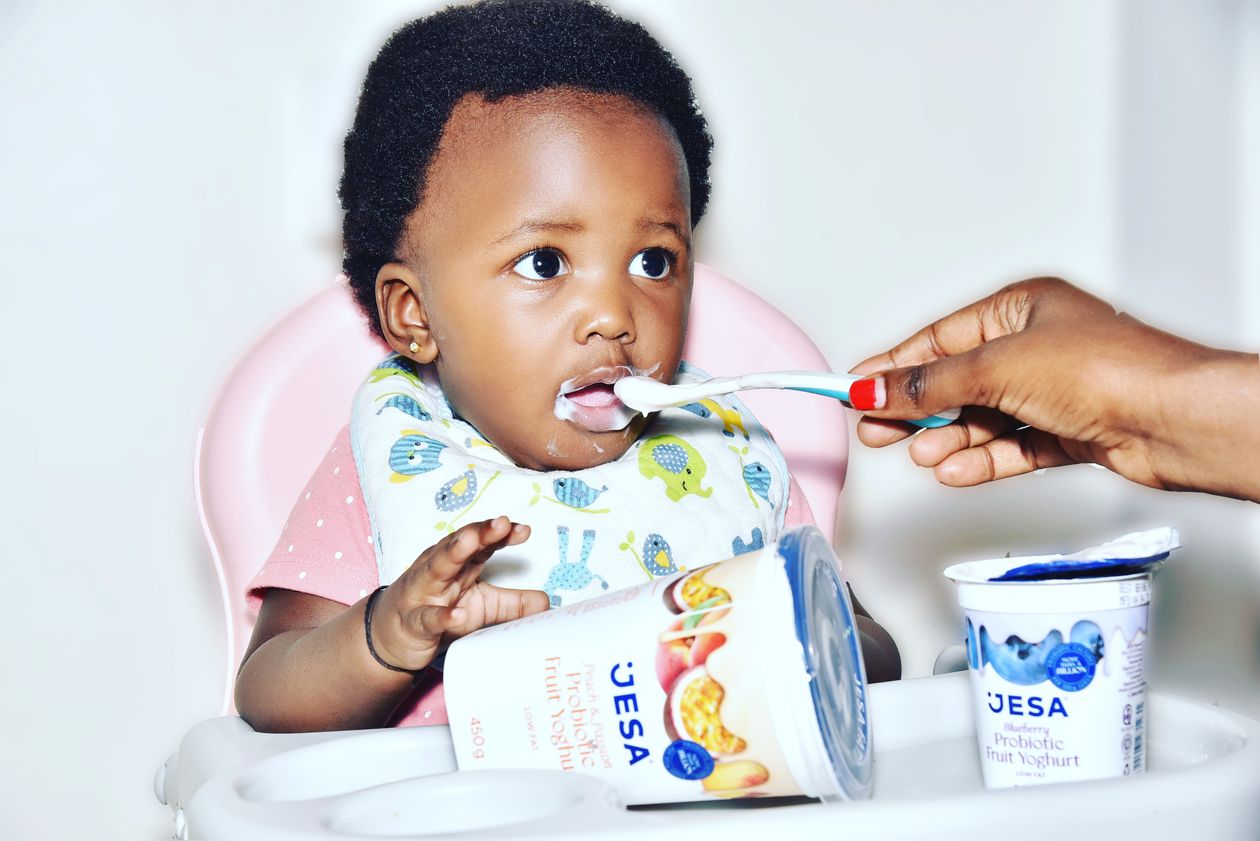
Quick Answer: Spoon Milestones by Age
This table summarizes when can babies use a spoon at each stage of development.
| Age | Milestone | What You Can Do |
|---|---|---|
| About 6 months | Spoon-fed purees by a parent | Use a soft-tipped baby spoon |
| 7–9 months | Grabs at the spoon, mouths it | Offer a preloaded spoon to hold |
| 10–12 months | Tries to scoop and bring spoon to mouth | Thick foods that cling to the spoon |
| 15–18 months | Uses a spoon with some spills | Let them feed most of the meal |
| 18–24 months | Uses a spoon fairly well | Introduce a fork for soft pieces |
Signs Your Baby Is Ready to Hold a Spoon
- Reaches for the spoon while you feed them.
- Picks up food with a pincer grasp, using thumb and finger.
- Brings toys and food to the mouth accurately.
- Sits steadily in a high chair.
- Shows interest in doing it themselves, sometimes refusing to be fed.
These cues, rather than a specific date, are the best guide to when can babies use a spoon independently. Some babies show interest at eight months, while others prefer finger foods until well past their first birthday.
Starting With Spoon-Feeding
When your baby first starts solids, you will likely spoon-feed smooth purees or mashed foods. Offer the spoon at your baby’s lip level and let them lean forward and open their mouth, rather than pushing the spoon in. This respects their hunger cues and helps them learn to close their lips around the spoon. The CDC guide to introducing solid foods explains timing, textures, and signs of readiness for solids.
Many families combine spoon-feeding with finger foods, or follow baby-led weaning, where babies feed themselves soft finger foods from the start. Both approaches work, and babies following either one learn to use a spoon in time.
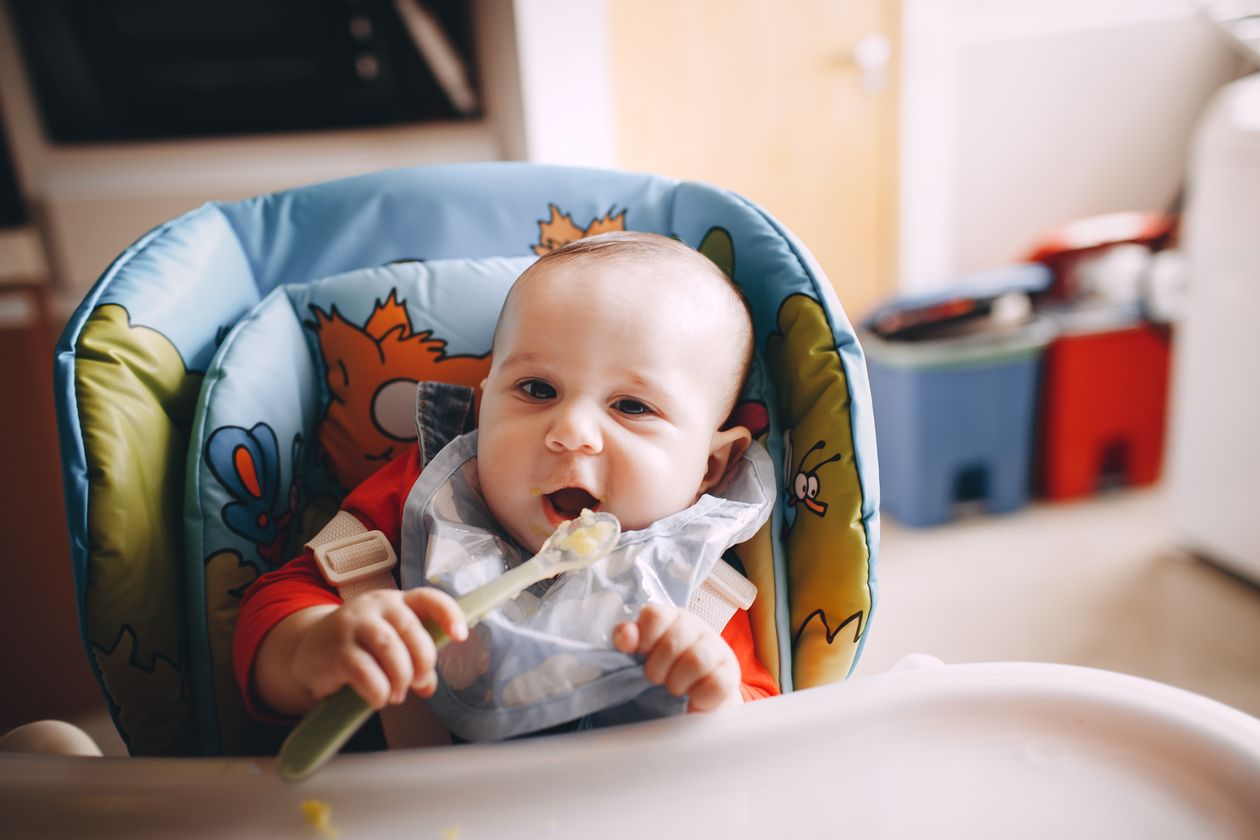
Choosing the Right First Spoon
- Soft silicone tips are gentle on gums for parent feeding.
- Short, chunky handles are easier for small fists to grip.
- Pre-loading spoons with textured or dipping heads hold thick foods without scooping.
- Shallow bowls make it easier to get food into the mouth.
- Choke guards stop the spoon from going too far back.
- Dishwasher-safe, BPA-free materials for easy cleaning.
How to Teach Your Baby to Use a Spoon
- Start with preloaded spoons: dip the spoon in a thick puree and hand it to your baby, handle first.
- Model the motion: eat with your own spoon so they can copy you.
- Use thick, sticky foods such as yogurt, oatmeal, mashed potatoes, or hummus that cling to the spoon.
- Offer a suction bowl so the bowl stays put while they scoop.
- Use two spoons: one for your baby to practice with and one for you to help feed.
- Keep practice short and positive, and finish feeding them if they get frustrated.
Best Foods for Spoon Practice
Thick foods are your best friend when practicing. Greek yogurt, oatmeal, thick fruit purees, mashed sweet potato, cottage cheese, chia pudding, and hummus all stay on the spoon well. Runny soups and thin purees are frustrating at first because they slide off before reaching the mouth. Small, soft pasta shapes and well-cooked rice can be tried once your baby is scooping more confidently. Offering the right textures makes a big difference in when can babies use a spoon successfully.
Managing the Mess
Self-feeding is messy, and that is completely normal. Use a full-coverage bib or a bib with a catch pocket, put a splash mat under the high chair, and choose a high chair with a removable, easy-clean tray. Plan practice meals when you are not in a rush, such as weekend breakfasts. Our guide to the best baby high chairs highlights models that are easy to wipe down after messy meals, and our article on when a baby can sit in a high chair covers seating readiness.
Spoon, Cup, and Fork: The Bigger Picture
Learning to use a spoon often happens alongside learning to drink from a cup. Around 6 to 9 months, many babies start practicing with an open cup or straw cup, and by 12 months they use cups more regularly. See our guide to when babies can use a sippy cup for details. Forks usually come a little later, around 15 to 18 months, starting with a toddler fork with blunt tines for stabbing soft pieces of food.
What If My Toddler Still Will Not Use a Spoon?
Some toddlers prefer fingers well into their second year, and that is usually fine. Keep offering a spoon at every meal without pressure, give them foods that are easier to scoop, and eat together so they can watch. If your child is older than about two and shows no interest, has trouble gripping objects in general, or seems to struggle with other fine motor skills, mention it to your pediatrician, who may suggest an occupational therapy assessment. For most families, though, the timeline for when can babies use a spoon simply varies with personality.
Avoid turning meals into a battle. Pressure often backfires and makes toddlers less willing to try. A calm, consistent approach, with plenty of praise for effort rather than tidiness, works best.
Daycare and Caregivers
If your baby attends daycare or spends time with grandparents, share your approach so spoon practice stays consistent. Many daycares encourage self-feeding from around the first birthday, and toddlers often copy older children at the table, which can speed things up. Let caregivers know which spoons and foods your baby handles best. Consistent practice across settings is one of the simplest ways to move along the timeline for when can babies use a spoon on their own.
Common Mistakes to Avoid
- Expecting tidy eating too early.
- Using thin, runny foods for practice.
- Taking the spoon away every time they make a mess.
- Using adult metal spoons that are too big and hard for small mouths.
Shop This Guide
If you decide this gear is right for you, these links show current options and prices. Check reviews, size and weight limits, and recall status before you buy.
Want our top picks? Read our guide to the best baby high chair.
As an Amazon Associate, we earn from qualifying purchases at no extra cost to you.
A Practical Scenario: Learning at Breakfast
Imagine parents whose ten-month-old keeps grabbing the spoon during feeding. Instead of moving it away, they hand him a chunky silicone spoon preloaded with oatmeal and keep a second spoon for themselves. At first most of the oatmeal ends up on his cheeks, but within a few weeks he gets the spoon to his mouth more often than not. By 16 months he feeds himself yogurt with only a few spills. For them, the answer to when can babies use a spoon was about ten months for practice and sixteen months for real success.
Frequently Asked Questions
When can babies use a spoon?
They can be spoon-fed from about 6 months and usually start self-feeding with a spoon between 10 and 12 months, becoming skilled by 15 to 24 months.
What is the best first spoon for a baby?
A short, chunky silicone spoon or a preloading spoon with a textured head.
Should I let my baby feed themselves with a spoon?
Yes, practice builds fine motor skills and independence, even if it is messy.
When do babies use a fork?
Usually around 15 to 18 months, starting with a blunt toddler fork.
Final Thoughts: When Can Babies Use a Spoon?
When can babies use a spoon? Expect parent spoon-feeding around 6 months, first self-feeding attempts around 10 to 12 months, and fairly confident spoon use between 15 and 24 months. Offer preloaded spoons, thick foods, and lots of patience, and accept the mess as part of the learning. Every baby gets there in their own time.
Sources & Expert References
- American Academy of Pediatrics (HealthyChildren.org)
- CDC Child Safety & Injury Prevention
- CPSC Nursery Product Safety
- Before you buy: Check the current recall list at CPSC.gov/Recalls, especially for secondhand or older gear.

About the Author
TheBabyGearList Team
TheBabyGearList is an independent baby-gear site. We put each guide together from manufacturer specifications, safety standards and guidance (AAP, CPSC, NHTSA and JPMA), and patterns in verified buyer reviews. We use AI writing tools to help draft guides and review every guide before it goes live. We have not hands-on tested every product we mention, so please check the manufacturer's current instructions and limits before you buy or use any gear, and talk to your pediatrician about health questions. Spotted something out of date? Tell us through the Contact page.