- Quick Answer by Age
- Why Newborns Need a Flat Position
- Readiness Signs for an Upright Stroller Seat
- Using the Car Seat on the Stroller
- Stroller Types and When Babies Can Use Them
- Facing Direction
- Stroller Safety Tips
- Choosing a Stroller That Grows With Your Baby
- Weather and Comfort Tips
- How to Read Your Stroller Manual
- Signs Your Baby Is Not Ready Yet
- Common Mistakes to Avoid
- Shop This Guide
- A Practical Scenario: A Six-Month Transition
- Quick Recap
- Frequently Asked Questions
- Final Thoughts: When Can a Baby Sit in a Stroller Without a Car Seat?
- Free Newborn Gear Checklist
- Everything you need before baby arrives — get the free printable checklist, straight to your inbox.
As an Amazon Associate, we earn from qualifying purchases linked in this post.
When can a baby sit in a stroller without a car seat? Most babies can ride in a regular stroller seat, without an infant car seat or bassinet attachment, at around 6 months, once they have strong head and neck control and can sit with minimal support. Before then, newborns should ride lying flat in a bassinet or a stroller seat that fully reclines to a near-flat position, or in an infant car seat clicked securely into a compatible stroller frame.
The exact timing depends on your stroller and your baby. Some stroller seats are approved from birth when fully reclined, while others are designed for babies 6 months and older. Below we explain the stages, what “fully reclined” really means, readiness signs, how long babies should stay in car seats on outings, safety tips, and how to choose a stroller that grows with your child.

Quick Answer by Age
This table gives a quick answer to when can a baby sit in a stroller without a car seat and what to use at each stage.
| Age | Stroller Setup | Why |
|---|---|---|
| 0–3 months | Bassinet, carrycot, or near-flat recline; or car seat on a compatible frame | Newborns need flat support for breathing and spine |
| 3–6 months | Reclined stroller seat if the manual allows | Head control improving but not ready to sit upright |
| 6 months+ | Upright stroller seat | Good head and trunk control, sits with minimal support |
| 12 months+ | Upright seat or lightweight umbrella stroller | Strong sitting and longer outings |
Why Newborns Need a Flat Position
Newborns lack the muscle strength to hold up their heads, and when they slump forward in a semi-upright seat, their chin can drop to their chest and narrow the airway. Lying flat also supports healthy spine development. That is why stroller manufacturers specify bassinets, carrycots, or near-flat seat recline for young babies.
Infant car seats are safe on stroller frames for outings, but long periods in a car seat outside the car are not recommended. If your baby falls asleep in any seat, move them to a flat, firm sleep surface when you can, as advised in the AAP parent guide to safe sleep.
Readiness Signs for an Upright Stroller Seat
- Steady head and neck control while moving.
- Sits with little or no support on the floor.
- Stays upright without slumping sideways in the seat.
- Meets the stroller’s minimum age and weight for upright use.
These signs, rather than age alone, give the best answer to when can a baby sit in a stroller without a car seat in an upright position.

Using the Car Seat on the Stroller
Travel systems let you click an infant car seat onto a stroller frame, which is convenient for moving a sleeping baby from car to stroller. This is safe when the car seat is properly attached with the correct adapters. However, experts recommend limiting time in car seats outside the car, because the semi-reclined position is not ideal for long periods. For longer walks, a bassinet or flat-reclining seat is better. Our guide on convertible vs. infant car seats explains how infant seats fit into the bigger picture.
Stroller Types and When Babies Can Use Them
- Full-size strollers with bassinets: suitable from birth with the bassinet.
- Full-size strollers with flat recline: some seats are approved from birth when fully reclined.
- Jogging strollers: most experts suggest waiting until about 6 to 8 months, or longer for actual running, because of bouncing.
- Lightweight and umbrella strollers: usually best from about 6 months, as many do not recline fully.
- Travel strollers: check the manual; some are approved from birth with a newborn kit.
Facing Direction
Many parents keep young babies parent-facing for connection and reassurance, then switch to world-facing once babies are older and curious. See our guide on when a baby can face forward in a stroller for details.
Stroller Safety Tips
- Always use the harness, including the crotch strap.
- Lock the brakes whenever you stop.
- Avoid hanging heavy bags on the handlebar, which can tip the stroller.
- Do not cover the stroller with a blanket, which can trap heat; use a breathable sunshade instead.
- Check for recalls and register your stroller.
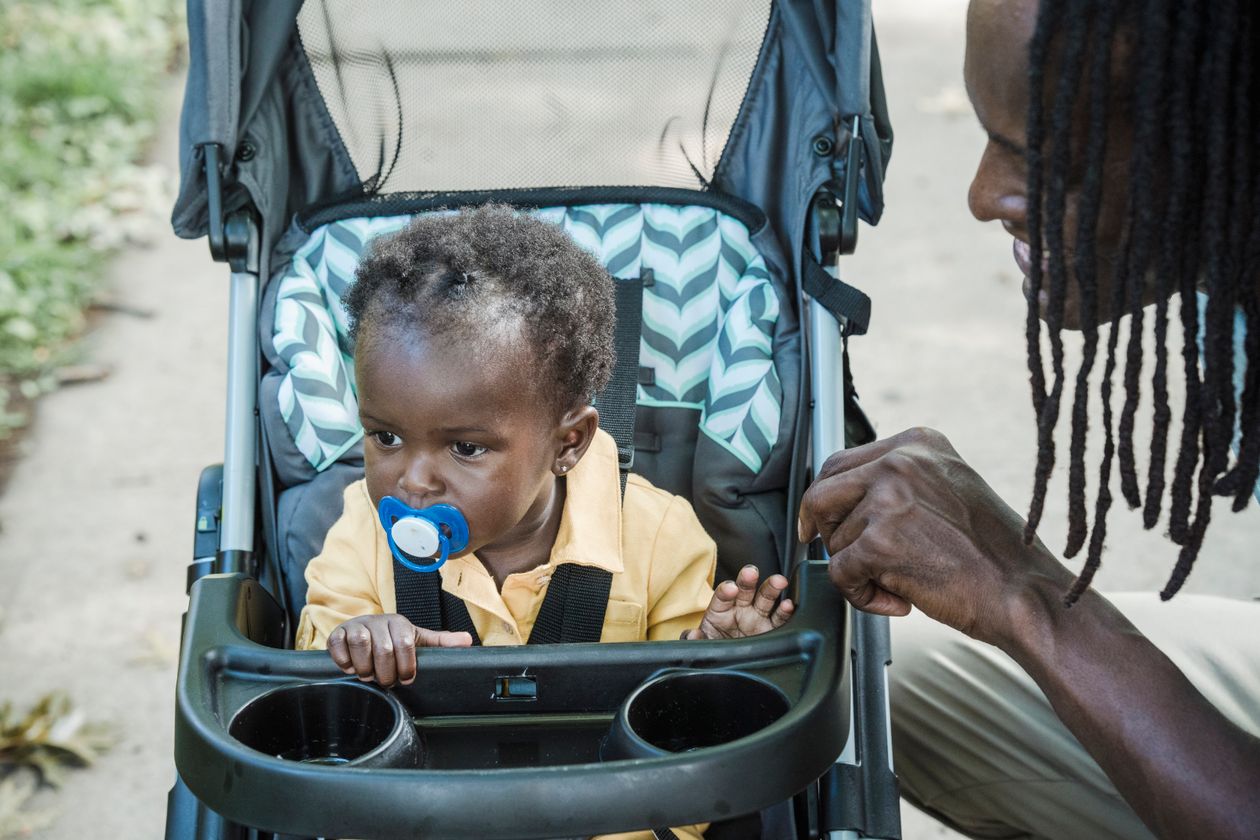
Choosing a Stroller That Grows With Your Baby
If you want one stroller from birth to toddlerhood, look for a seat that reclines nearly flat or a compatible bassinet, a reversible seat, adjustable footrest, sturdy harness, good suspension, and a large basket. Compare options in our guide to the best baby strollers, and if you are still deciding between babywearing and a stroller, read baby carrier vs. stroller for newborns.
Weather and Comfort Tips
In hot weather, dress your baby lightly, use a breathable sunshade, and avoid draping blankets over the stroller, which can raise the temperature inside quickly. In cold weather, use a stroller footmuff or layers rather than bulky snowsuits under the harness. Check on your baby often, especially if they are sleeping. These comfort steps matter as much as knowing when can a baby sit in a stroller without a car seat.
How to Read Your Stroller Manual
Your stroller manual is the most reliable source for when can a baby sit in a stroller without a car seat with your specific model. Look for the minimum age or weight for the main seat, whether the seat is approved from birth when fully reclined, and which accessories, such as a newborn insert, bassinet, or car seat adapter, are required for young babies.
Many manuals also list a maximum weight, harness height limits, and recline angles. If the manual says the seat is for babies 6 months and older, follow that guidance even if your baby seems ready sooner.
Keep the manual or a digital copy handy, and register your stroller so you are notified about recalls. If you bought your stroller secondhand, download the manual from the manufacturer’s website and check that all parts and accessories are included.
Signs Your Baby Is Not Ready Yet
If your baby slumps to one side, their head bobs forward when the stroller moves, or they seem uncomfortable after a few minutes upright, go back to a more reclined position and try again in a few weeks. Readiness, not a calendar date, decides when can a baby sit in a stroller without a car seat comfortably and safely.
Common Mistakes to Avoid
- Sitting a newborn upright in a stroller seat not designed for them.
- Leaving babies in car seats on the stroller for hours.
- Skipping the harness for short trips.
- Overloading the handlebar with bags.
Shop This Guide
If you decide this gear is right for your family, these links show current options and prices. Check reviews, age and weight limits, and recall status before you buy.
Want our top picks? Read our guide to the best baby stroller.
As an Amazon Associate, we earn from qualifying purchases at no extra cost to you.
A Practical Scenario: A Six-Month Transition
Imagine parents who used a travel system for their son’s first months, clicking the infant car seat onto the stroller frame for errands and using the bassinet for long walks. At six months, he sits well with support, so they switch to the upright stroller seat, still parent-facing at first. For them, the honest answer to when can a baby sit in a stroller without a car seat was six months.
Quick Recap
If you only remember one thing about when can a baby sit in a stroller without a car seat, remember that head and trunk control matter more than the calendar. Ask yourself when can a baby sit in a stroller without a car seat for your specific stroller model by checking the manual.
Grandparents and caregivers often ask when can a baby sit in a stroller without a car seat too, so share these readiness signs with anyone who takes your baby out. Knowing when can a baby sit in a stroller without a car seat helps everyone keep outings safe and comfortable.
Frequently Asked Questions
When can a baby sit in a stroller without a car seat?
Usually around 6 months for an upright seat, or from birth in a bassinet or fully reclined seat if the manufacturer allows.
Can newborns use a regular stroller seat?
Only if the seat reclines nearly flat and is approved for newborns.
How long can a baby stay in a car seat on a stroller?
Keep it to short outings, and move your baby to a flat surface for sleep.
When can babies use an umbrella stroller?
Most umbrella strollers are designed for babies 6 months and older.
Final Thoughts: When Can a Baby Sit in a Stroller Without a Car Seat?
When can a baby sit in a stroller without a car seat? Around 6 months for an upright seat, once your baby has strong head control and sits with minimal support. Before that, use a bassinet, a fully reclined approved seat, or a properly attached infant car seat for short trips. Follow your stroller’s manual, use the harness, and keep outings comfortable and safe.
Sources & Expert References
- American Academy of Pediatrics (HealthyChildren.org)
- CDC Child Safety & Injury Prevention
- CPSC Nursery Product Safety
- Before you buy: Check the current recall list at CPSC.gov/Recalls, especially for secondhand or older gear.

About the Author
TheBabyGearList Team
TheBabyGearList is an independent baby-gear site. We put each guide together from manufacturer specifications, safety standards and guidance (AAP, CPSC, NHTSA and JPMA), and patterns in verified buyer reviews. We use AI writing tools to help draft guides and review every guide before it goes live. We have not hands-on tested every product we mention, so please check the manufacturer's current instructions and limits before you buy or use any gear, and talk to your pediatrician about health questions. Spotted something out of date? Tell us through the Contact page.