- Quick Answer: Oral Care by Age
- Why Baby Teeth Matter
- How Much Toothpaste to Use
- Choosing a Baby Toothbrush
- Step-by-Step Brushing Routine
- Bedtime Bottles and Night Feeds
- The First Dental Visit
- Tips for Babies Who Hate Brushing
- Teething and Brushing
- What If Teeth Come In Early or Late?
- Building a Habit That Lasts
- Common Mistakes to Avoid
- Shop This Guide
- A Practical Scenario: The First Tooth
- Frequently Asked Questions
- Final Thoughts: When to Start Brushing Baby Teeth
- Free Newborn Gear Checklist
- Everything you need before baby arrives — get the free printable checklist, straight to your inbox.
As an Amazon Associate, we earn from qualifying purchases linked in this post.
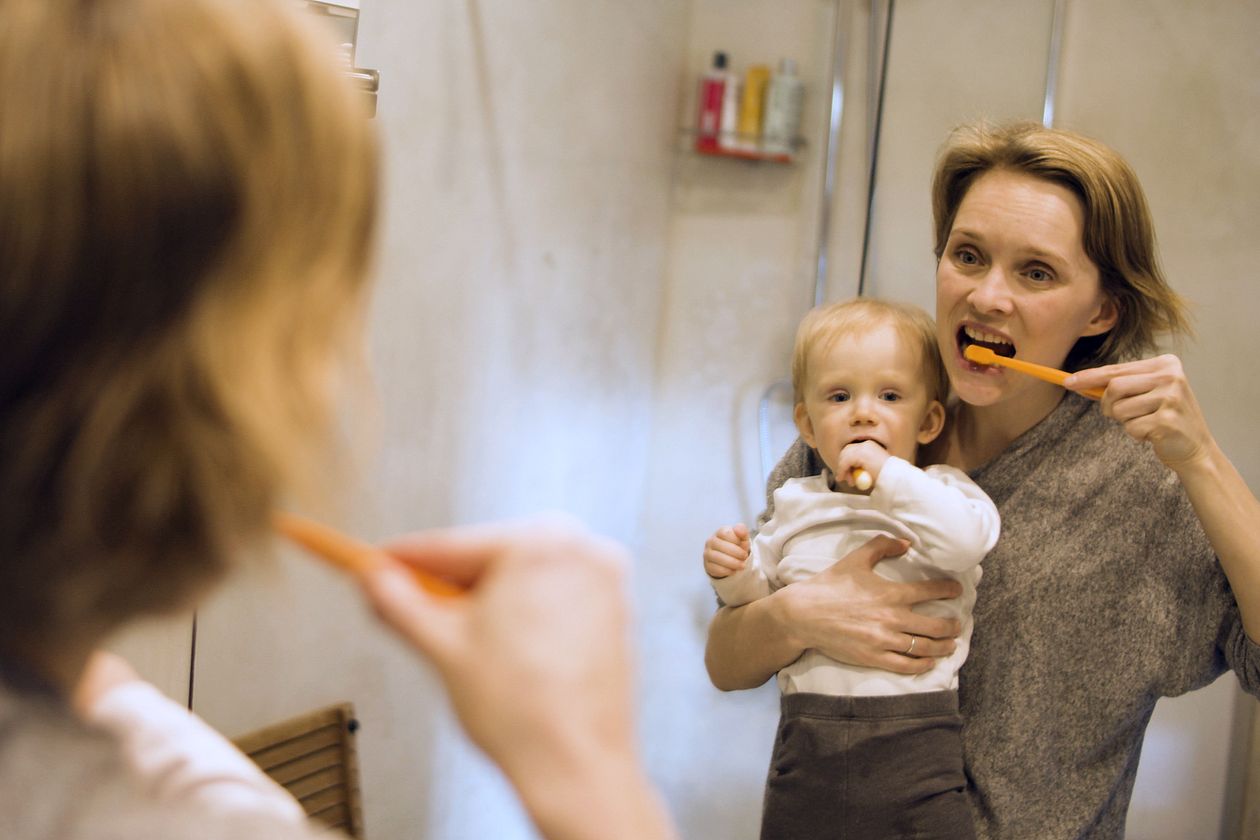
When to start brushing baby teeth? Start as soon as the first tooth appears, which for most babies happens somewhere between 4 and 12 months. Even before that, you can gently wipe your baby’s gums once or twice a day with a clean, damp washcloth or gauze to remove milk residue and get your baby used to having their mouth cleaned.
Many parents assume baby teeth do not matter because they fall out, but tooth decay is one of the most common chronic conditions in young children. Baby teeth hold space for adult teeth, help with chewing and speech, and affect confidence later. Below we explain exactly when to start brushing baby teeth, how much toothpaste to use, which toothbrush to choose, a simple routine, first dental visits, and tips for babies who resist brushing.
Quick Answer: Oral Care by Age
This table summarizes when to start brushing baby teeth and how routines change as your child grows.
| Age | What to Do | Toothpaste |
|---|---|---|
| Birth to first tooth | Wipe gums with a damp cloth | None |
| First tooth (about 6 months) | Brush twice daily with an infant brush | Fluoride toothpaste, rice-grain smear |
| 12 months | Brush twice daily; first dental visit by now | Rice-grain smear |
| 3 years | Brush twice daily, start flossing touching teeth | Pea-sized amount |
| 6 years+ | Child brushes with supervision | Pea-sized amount |
Why Baby Teeth Matter
Baby teeth are thinner and softer than adult teeth, so decay can spread quickly. Cavities in baby teeth can cause pain, infections, trouble eating and sleeping, and early tooth loss, which may lead to crowding when adult teeth come in. Bacteria that cause decay can also be passed from parents to babies through shared spoons and cleaned pacifiers. Good habits started early are one of the best investments you can make in your child’s long-term health, which is why knowing when to start brushing baby teeth matters so much.
How Much Toothpaste to Use
The American Dental Association and the American Academy of Pediatrics recommend fluoride toothpaste from the first tooth. For children under 3, use a smear the size of a grain of rice. From age 3 to 6, use a pea-sized amount. These tiny amounts protect teeth from decay while keeping fluoride intake safe if your baby swallows some, which they will. Do not rinse with water afterward; simply wipe away excess foam so the fluoride can keep working.
Choosing a Baby Toothbrush
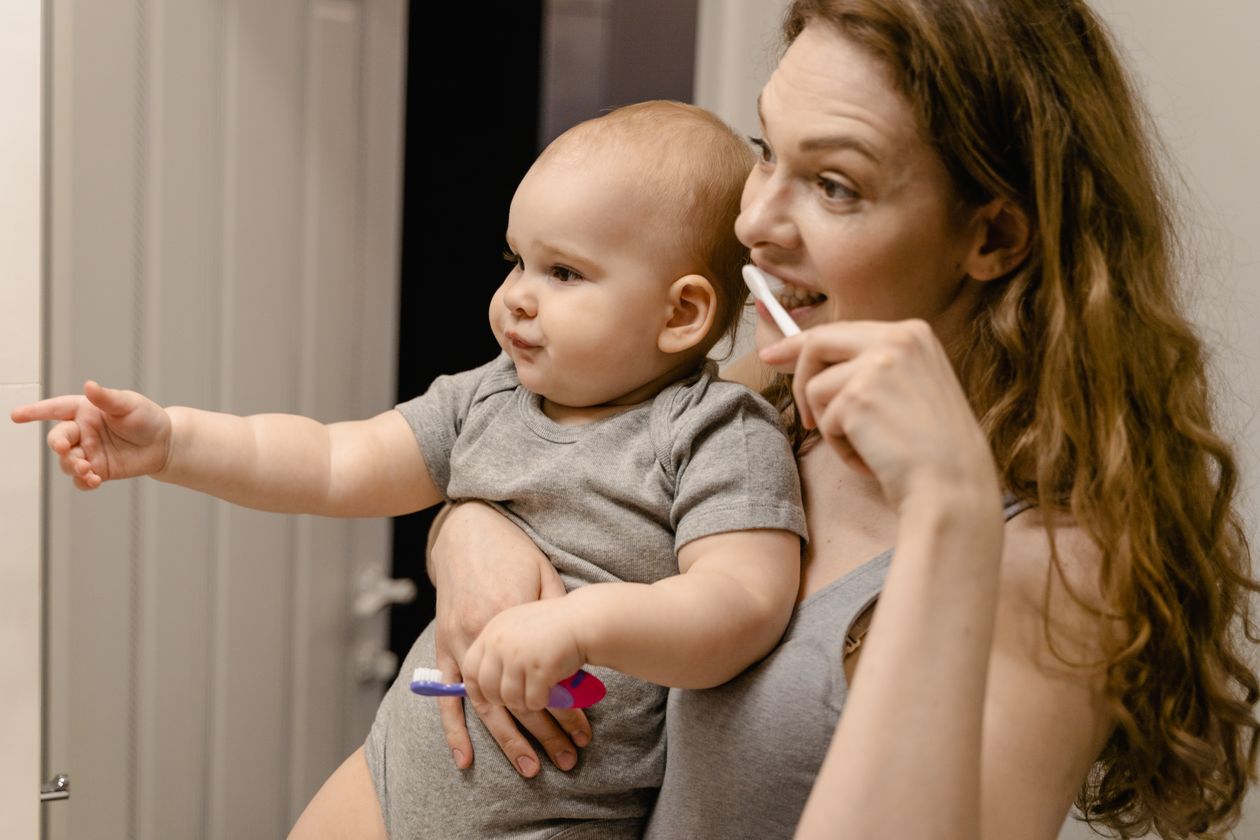
- Soft bristles designed for infants.
- Small head that fits easily in your baby’s mouth.
- Large, easy-grip handle for you to hold.
- Finger brushes can work for the first teeth, but watch for bites.
- Silicone teether brushes are fun for babies to chew, but they do not replace parent brushing.
- Replace every 3 months, or sooner if bristles fray.
Step-by-Step Brushing Routine
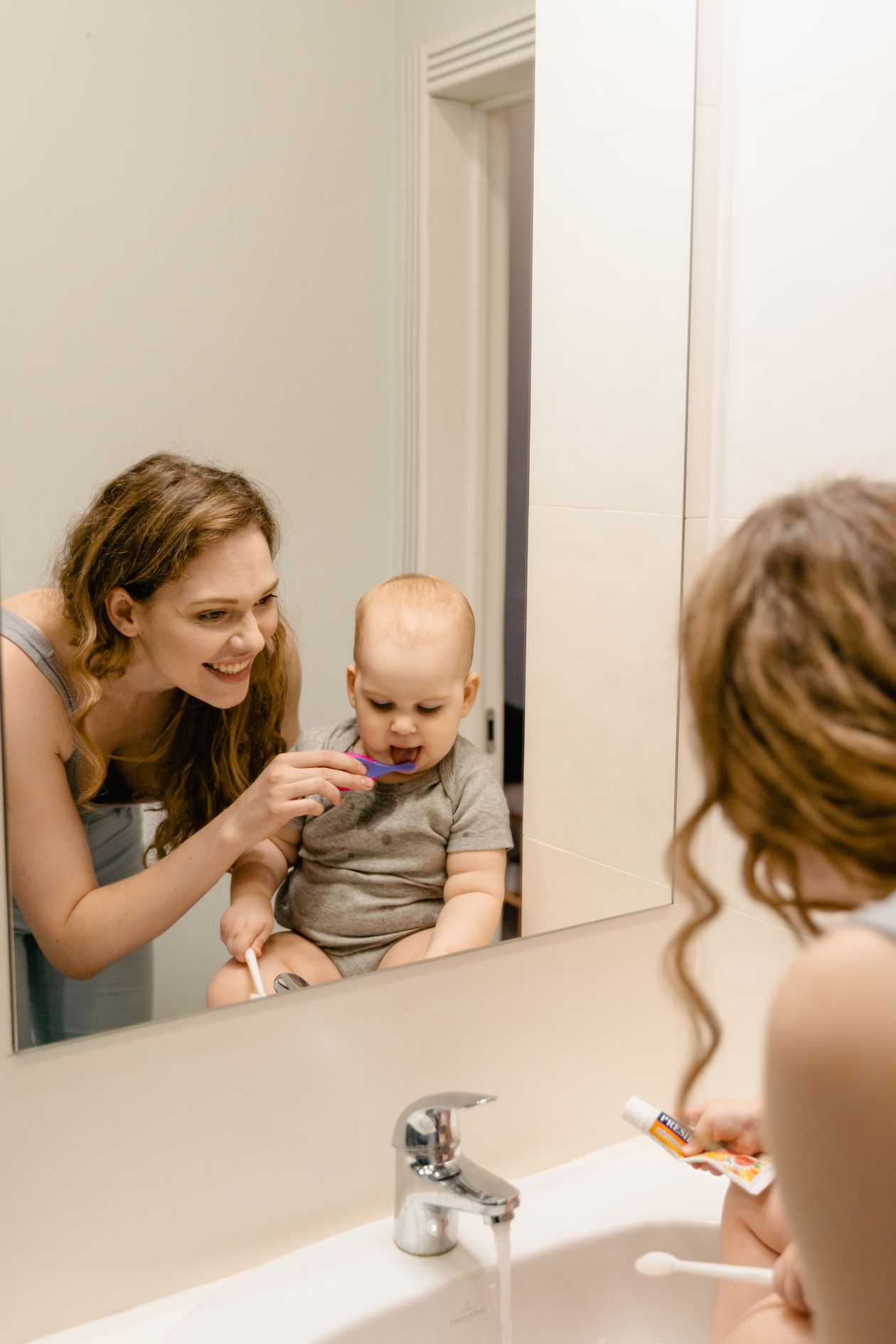
- Position your baby on your lap, facing away from you with their head against your chest, or lying down with their head in your lap.
- Apply a rice-grain smear of fluoride toothpaste.
- Lift the lip gently to see the teeth and gumline.
- Brush in small circles on the front, back, and chewing surfaces for about two minutes in total.
- Wipe away excess toothpaste without rinsing.
- Brush twice daily, with the night brush after the last feed.
Bedtime Bottles and Night Feeds
Milk and formula contain sugars that feed decay-causing bacteria. Putting a baby to bed with a bottle, or letting them sip juice throughout the day, bathes the teeth in sugar for long periods. Brush after the last feed, avoid bottles in the crib, and offer water between meals once your baby is over 6 months. Moving to an open or sippy cup around the first birthday also helps; see when babies can use a sippy cup for timing.
The First Dental Visit
Book your baby’s first dental visit by the first birthday or within six months of the first tooth, whichever comes first. The dentist will check for early signs of decay, apply fluoride varnish if needed, and give you personalized advice. Many pediatricians also apply fluoride varnish at well-baby visits. Early visits help your child get comfortable with the dentist before any problems arise.
Tips for Babies Who Hate Brushing
- Make it a song or a short game that lasts about two minutes.
- Let your baby hold a second toothbrush while you brush.
- Brush your own teeth together so they can copy you.
- Try different positions, such as lying down on the bed or in a bath after a calm bath time.
- Keep going, even when it is quick; a short brush is better than none.
- Stay calm and consistent; most babies accept it within a few weeks.
Teething and Brushing
Teething can make gums sore, so your baby may resist brushing during flare-ups. Use an extra-soft brush, be gentle, and offer a chilled teething ring before brushing to numb the gums. Never skip fluoride toothpaste because of teething; just adjust your technique. Avoid teething gels with benzocaine, and avoid amber necklaces, which pose choking and strangulation risks.
What If Teeth Come In Early or Late?
Some babies are born with a tooth or cut their first one at three months, while others have gummy smiles past their first birthday. The rule for when to start brushing baby teeth stays the same either way: begin brushing as soon as any tooth is visible. If your baby has no teeth by around 18 months, mention it to your pediatrician or dentist, but late teething is usually just normal variation and often runs in families.
Early teeth need the same gentle care as later ones. If a tooth appears in the first few months, use a soft infant brush or clean cloth with a rice-grain smear of fluoride toothpaste, and ask your pediatrician if you have concerns about feeding comfort.
Building a Habit That Lasts
Consistency matters more than perfection. Attach brushing to things that already happen every day, such as after breakfast and after the last bedtime feed, so it becomes automatic. Keep the toothbrush and toothpaste where you will see them, such as next to the changing table or in the bathroom by the bath supplies. Parents who understand when to start brushing baby teeth and make it routine early usually find toddler brushing far easier, because their child simply expects it.
Once your child turns two or three, let them have a turn first and then finish the job yourself. Children do not have the coordination to clean every surface on their own until around age 6 to 8, so supervision is still essential even after they insist on doing it themselves. Remember, the question of when to start brushing baby teeth has a simple answer, but keeping the habit going takes patience.
Common Mistakes to Avoid
- Waiting until all teeth are in before brushing.
- Using too much toothpaste for young children.
- Skipping the bedtime brush after the last feed.
- Letting toddlers brush alone; children need help until about age 6 to 8.
- Sharing spoons or cleaning pacifiers with your mouth.
Shop This Guide
If you decide this gear is right for your family, these links show current options and prices. Check reviews, age and weight limits, and recall status before you buy.
- Infant toothbrushes on Amazon →
- Baby fluoride toothpaste on Amazon →
- Silicone finger brushes on Amazon →
As an Amazon Associate, we earn from qualifying purchases at no extra cost to you.
A Practical Scenario: The First Tooth
Imagine parents who notice a tiny white edge on their daughter’s bottom gum at seven months. They had been wiping her gums after bath time, so they simply swap the washcloth for a soft infant toothbrush with a rice-grain smear of fluoride toothpaste. She chews the brush at first, so they sing a short song and let her hold a second brush. Within two weeks brushing is part of bedtime. For them, the answer to when to start brushing baby teeth was the day that first tooth appeared.
Frequently Asked Questions
When to start brushing baby teeth?
As soon as the first tooth appears, usually between 4 and 12 months.
Should I use fluoride toothpaste for my baby?
Yes, a rice-grain smear from the first tooth, as recommended by dental and pediatric experts.
How should I clean my baby’s gums before teeth?
Wipe them gently with a clean, damp washcloth or gauze once or twice a day.
When should my baby see a dentist?
By the first birthday or within six months of the first tooth.
How long should I brush my baby’s teeth?
Aim for about two minutes, twice a day, though short sessions are fine at first.
Final Thoughts: When to Start Brushing Baby Teeth
When to start brushing baby teeth? The moment the first tooth breaks through, with gum wiping before then. Use a soft infant toothbrush and a rice-grain smear of fluoride toothpaste twice a day, brush after the last feed, and book a dental visit by the first birthday. Starting early builds habits that protect your child’s smile for years.
Sources & Expert References
- American Academy of Pediatrics (HealthyChildren.org)
- CDC Child Safety & Injury Prevention
- CPSC Nursery Product Safety
- Before you buy: Check the current recall list at CPSC.gov/Recalls, especially for secondhand or older gear.

About the Author
TheBabyGearList Team
TheBabyGearList is an independent baby-gear site. We put each guide together from manufacturer specifications, safety standards and guidance (AAP, CPSC, NHTSA and JPMA), and patterns in verified buyer reviews. We use AI writing tools to help draft guides and review every guide before it goes live. We have not hands-on tested every product we mention, so please check the manufacturer's current instructions and limits before you buy or use any gear, and talk to your pediatrician about health questions. Spotted something out of date? Tell us through the Contact page.