- Accounting for Loss and Sterilizing
- Different Sizes as Babies Grow
- Replacing Worn Pacifiers Regularly
- Keeping Sets in Multiple Locations
- Shop This Guide
- Frequently Asked Questions
- Bottom Line: How Many Pacifiers Do You Need?
- Travel Cases and On-the-Go Storage
- Free Newborn Gear Checklist
- Everything you need before baby arrives — get the free printable checklist, straight to your inbox.
As an Amazon Associate, we earn from qualifying purchases linked in this post.
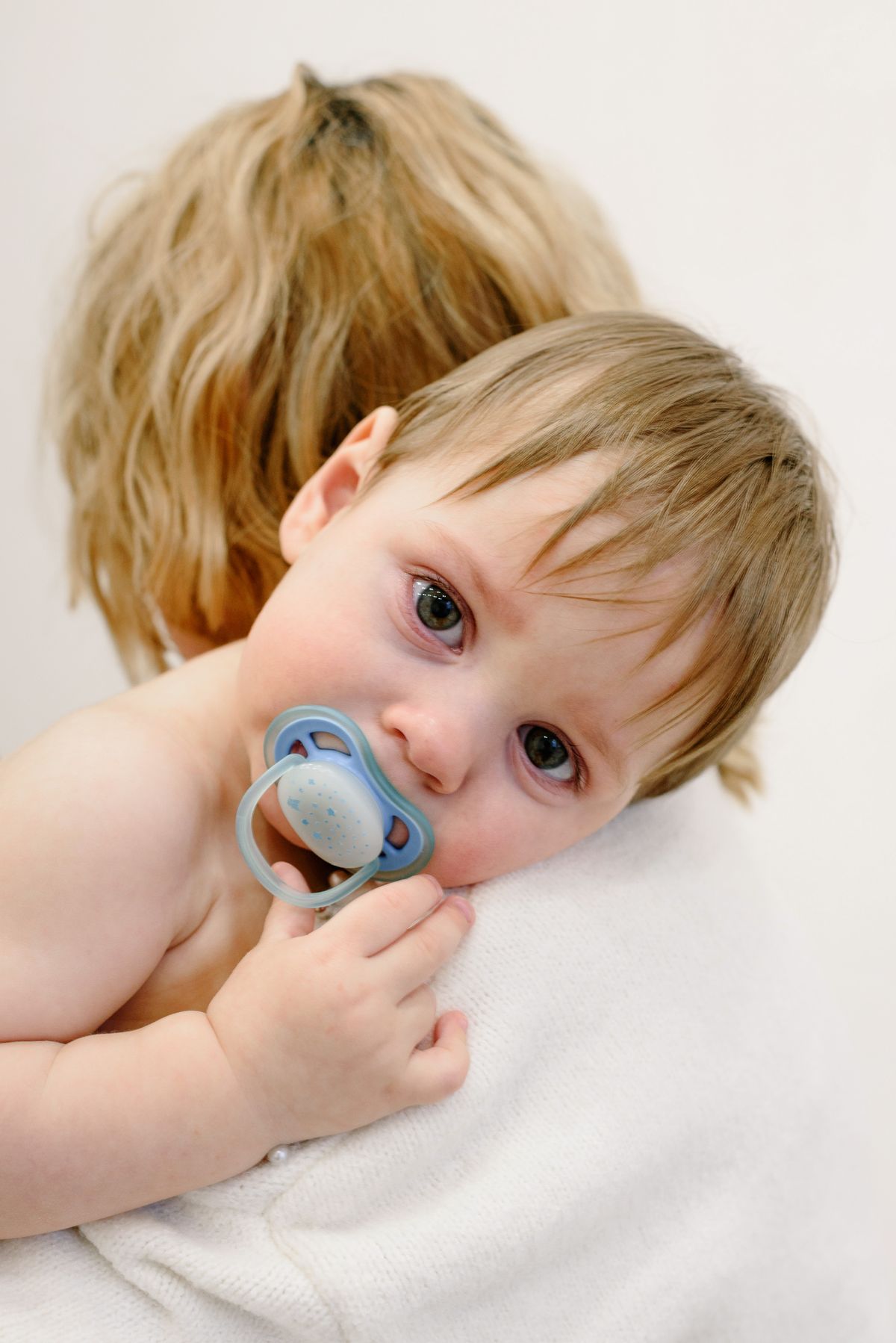
How many pacifiers do you need? Most parents find 4-6 is a practical baseline — enough to have one in use, a couple in the wash or sterilizing rotation, and a backup or two for when one inevitably ends up lost or dropped somewhere inconvenient.
Pacifiers are also easy to misplace and prone to needing regular replacement, which is why the practical number tends to run higher than what a baby uses at any single moment.
Accounting for Loss and Sterilizing
Between one in a diaper bag, one at home, one in the car, and a couple cycling through cleaning, how many pacifiers do you need adds up quickly even for a baby who only uses one at a time.
Different Sizes as Babies Grow
Most pacifier brands offer stage-based sizing (0-6 months, 6-18 months, etc.), so buying a full set upfront in one size often means rebuying as your baby ages into the next stage.
Replacing Worn Pacifiers Regularly
Pacifiers should be replaced every 4-8 weeks or immediately if cracked or torn, which is a bigger driver of ongoing need than loss alone. For general infant care guidance, see HealthyChildren.org.
Keeping Sets in Multiple Locations
Having a small dedicated set at daycare or a grandparent’s house, separate from your home stash, avoids the common scramble of forgetting to pack one during a swap between caregivers.
A simple sterilizing routine — boiling or using a dishwasher’s top rack — keeps a rotating set clean without needing to buy excessive quantities at once.
Shop This Guide
If you decide this gear is right for your family, these links show current options and prices. Check reviews, age and weight limits, and recall status before you buy.
As an Amazon Associate, we earn from qualifying purchases at no extra cost to you.
Frequently Asked Questions
Is it bad to reuse a dropped pacifier without cleaning it?
It’s best avoided when possible, since a quick rinse or wipe reduces germ exposure — though in practice, having enough spares on hand for how many pacifiers do you need actually use avoids the temptation entirely.
When should pacifier use be phased out?
Most pediatric guidance suggests weaning between 6 months and 2 years to reduce dental and speech development concerns, though timing varies by child.
Bottom Line: How Many Pacifiers Do You Need?
To sum up how many pacifiers do you need: 4-6 covers most households comfortably once you account for loss, cleaning rotation, and regular replacement.
Travel Cases and On-the-Go Storage
A small clip-on case attached to a diaper bag keeps a spare pacifier accessible and protected from dirt during outings, which reduces both loss and the need to improvise a quick rinse in public. Labeling cases by size can also help avoid mixing up stages within a multi-child household.
Pacifier habits often connect to broader home safety planning as a baby grows — our baby proofing guide covers the next stage of that planning.
Do all pacifier brands fit the same holder clips?
Not always — checking clip compatibility with your specific pacifier brand avoids buying holders that don’t actually attach properly.
Sources & Expert References
- American Academy of Pediatrics (HealthyChildren.org)
- CDC Child Safety & Injury Prevention
- CPSC Nursery Product Safety
- Before you buy: Check the current recall list at CPSC.gov/Recalls, especially for secondhand or older gear.

About the Author
Sarah Bennett
Sarah Bennett runs product testing for TheBabyGearList. She has three kids of her own (ages 7, 4, and 1), which means she has bought, returned, and worn out more strollers, car seats, and baby monitors than she can count. Every review on this site starts from a real comparison: she buys or borrows the top options in a category, uses them for at least two weeks with her own kids, and writes down the specific things that broke, annoyed her, or worked better than expected. Before this she spent four years as a product safety reviewer for a parenting magazine, checking car seat and crib listings against CPSC recall data. She lists the cheapest option that actually holds up first, and skips products she wouldn't put her own kids in.