- Quick Answer by Situation
- Signs It May Be Time to Stop
- Reasons to Keep a Monitor Longer
- A Monitor Is Not a Safe Sleep Device
- How to Transition Away From a Baby Monitor
- Monitor Safety Tips While You Use One
- Privacy and Security Tips for Wi-Fi Monitors
- Parental Anxiety and the Monitor
- Video, Audio, or Smart Monitors: Does Type Matter?
- Room Sharing and Monitors
- Other Uses for an Old Monitor
- Related Guides
- A Practical Scenario: A Three-Year-Old in a Two-Story Home
- Shop This Guide
- Frequently Asked Questions
- Final Thoughts: When to Stop Using a Baby Monitor
- Free Newborn Gear Checklist
- Everything you need before baby arrives — get the free printable checklist, straight to your inbox.
As an Amazon Associate, we earn from qualifying purchases linked in this post.
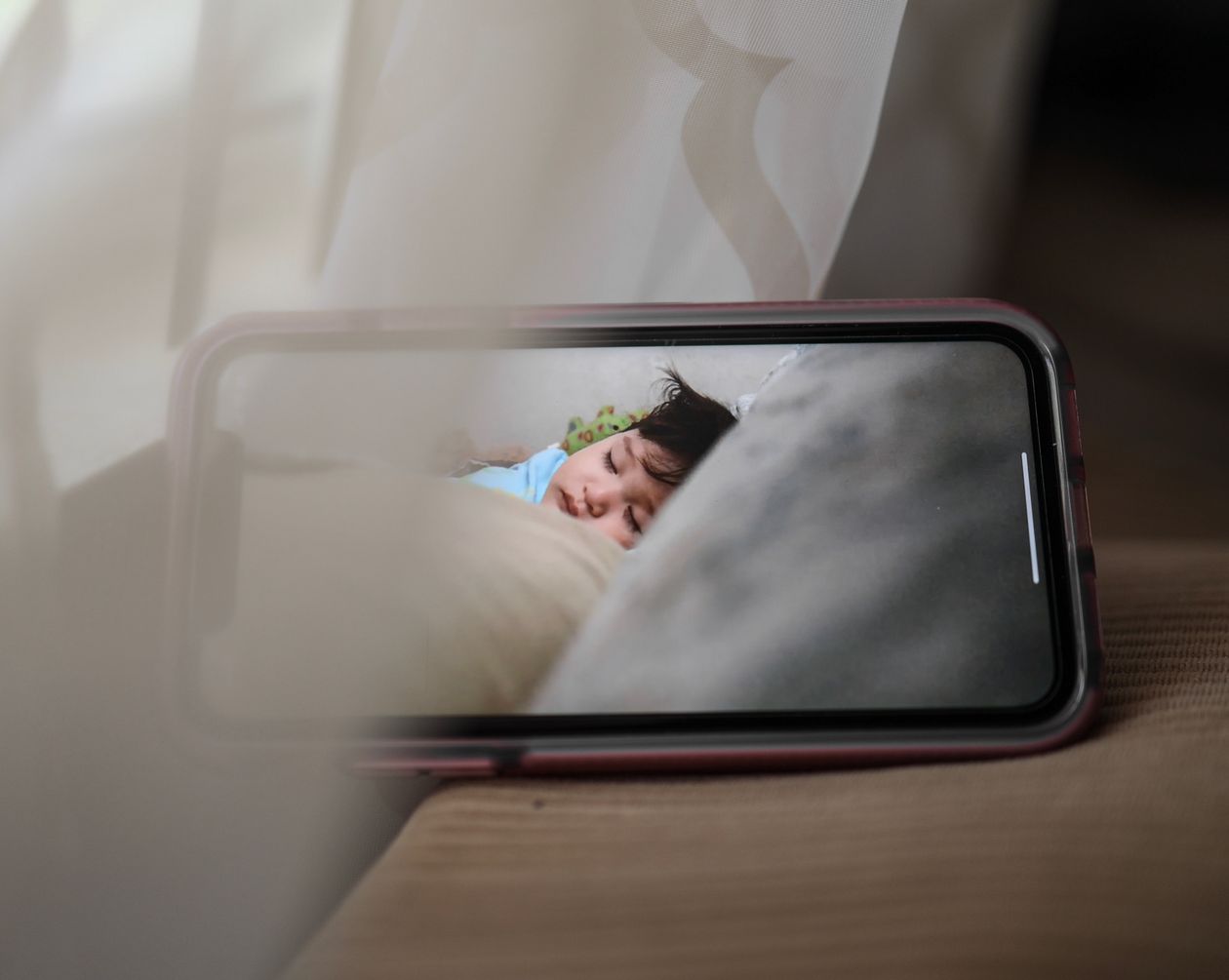
When to stop using a baby monitor? There is no single right age, but many families stop using a baby monitor somewhere between 2 and 4 years old, once their child sleeps reliably through the night, can call out or come to find a parent, and sleeps in a room close to the parents’ bedroom. Some parents stop as early as 6 to 12 months, while others keep a monitor longer for children with medical needs, frequent night waking, or a bedroom on a different floor.
A baby monitor is a convenience tool, not a safety device that prevents sudden infant death. Deciding when to stop depends on your home layout, your child’s sleep habits, and your own peace of mind. Below we explain the signs your child is ready, reasons some families keep a monitor longer, how to transition away from it, and privacy and safety tips while you still use one.
Quick Answer by Situation
This table gives a quick answer to when to stop using a baby monitor in different situations.
| Situation | Typical Stopping Point | Why |
|---|---|---|
| Small home, nursery next to parents | 6–18 months | You can hear your baby without a monitor |
| Larger home or different floor | 2–4 years | Distance makes it hard to hear cries |
| Toddler bed transition | Often kept a while longer | Helps you know if your child gets up and wanders |
| Medical needs or seizures | As advised by your doctor | Monitoring may be part of a care plan |
| Siblings sharing a room | Varies | Older sibling may wake parents if needed |
Signs It May Be Time to Stop
- Your child sleeps through the night most nights.
- You can hear them from your bedroom without the monitor.
- They can call for you or walk to your room safely.
- You check the monitor out of habit rather than need, and it disturbs your sleep.
- Your child is in a toddler bed and the room is fully childproofed.
- Your child asks for privacy or notices the camera.
When several of these signs appear, you may have found the answer to when to stop using a baby monitor for your family.
Reasons to Keep a Monitor Longer
Some families keep a monitor well into the toddler and preschool years. A child’s bedroom may be far from the parents’ room or on another floor. Children who recently moved to a toddler bed may get up at night, and a monitor lets parents know if they are wandering. Children with medical conditions, such as seizures, may need monitoring as part of a care plan. A monitor can also help during illness, when you want to hear coughing or breathing changes. In these situations, there is no rush to decide when to stop using a baby monitor.
A Monitor Is Not a Safe Sleep Device
Standard audio and video monitors let you hear and see your baby, but they do not prevent sudden infant death syndrome. The American Academy of Pediatrics advises against relying on home cardiorespiratory or consumer wearable monitors to reduce SIDS risk. The best protection is following safe sleep practices: back to sleep, a firm flat surface, and a bare crib. See the AAP parent guide to safe sleep.
How to Transition Away From a Baby Monitor
- Lower the volume gradually, or switch from video to audio only.
- Turn it off for naps first, when you are awake and nearby.
- Leave doors slightly open so you can hear more easily.
- Try a few nights without it and see how everyone sleeps.
- Keep it handy for illness, travel, or overnight guests.
Monitor Safety Tips While You Use One
- Keep cords at least 3 feet away from the crib, as cords are a strangulation risk.
- Mount cameras securely on a wall or shelf out of reach, not on the crib rail unless designed for it.
- Check for recalls on the CPSC’s safe sleep page and recall listings.
- Do not let the monitor replace safe sleep practices.
Privacy and Security Tips for Wi-Fi Monitors
Wi-Fi monitors can be convenient, letting you check on your child from your phone, but they can also be targets for hackers. Change default passwords, use strong unique passwords, keep firmware updated, enable two-factor authentication if available, and secure your home Wi-Fi network. Choose reputable brands with good security practices. Some parents prefer non-Wi-Fi monitors for added privacy.
Parental Anxiety and the Monitor
For many parents, the hardest part of deciding when to stop using a baby monitor is emotional rather than practical. Watching a screen can feel reassuring, but it can also create a cycle of checking every small movement or sound, which disrupts your own rest. Babies and toddlers naturally stir, talk, and shift during sleep, and most of these noises do not need a response. If you find yourself waking at every rustle, turning the volume down or switching to sound-activated alerts can help you sleep while still hearing real cries. Talking to your partner or pediatrician about your worries can also make the transition easier.
Video, Audio, or Smart Monitors: Does Type Matter?
The type of monitor can affect when to stop using a baby monitor. Audio monitors are simple and easy to phase out. Video monitors encourage more checking, so some parents move to audio-only first. Smart monitors with sleep tracking can create extra data that feels hard to give up, even though consumer wearables are not proven to prevent SIDS. Whatever type you use, the decision still comes down to your child’s needs and your home.
Room Sharing and Monitors
The AAP recommends room sharing, with your baby sleeping in their own crib or bassinet in your room, ideally for at least the first six months. During this time, many parents do not need a monitor at night at all, using one only for naps when they are in another part of the house. Once your baby moves to their own room, the monitor becomes more useful, which is why many families ask when to stop using a baby monitor only after the toddler years begin.
Other Uses for an Old Monitor
Once you stop using it for your child, a monitor can still be helpful. Some families use it as a pet camera, to keep an eye on an elderly relative, or to watch a younger sibling in the future. Store it with its charger and instructions if you plan to have more children.
Related Guides
Still deciding on a monitor? See our guide on whether you need a baby monitor. For sleep transitions, read when to switch from crib to toddler bed and our picks for the best white noise machines.
A Practical Scenario: A Three-Year-Old in a Two-Story Home
Imagine a family whose three-year-old sleeps upstairs while parents spend evenings downstairs. She sleeps well but sometimes wakes with bad dreams. Her parents keep an audio monitor on in the evenings and turn it off once they go to bed in the room next door. At three and a half, they stop entirely. For them, the honest answer to when to stop using a baby monitor depended on their home layout more than her age.
Shop This Guide
If you decide this gear is right for your family, these links show current options and prices. Check reviews, age and weight limits, and recall status before you buy.
Want our top picks? Read our guide to the best baby monitor.
As an Amazon Associate, we earn from qualifying purchases at no extra cost to you.
Frequently Asked Questions
When to stop using a baby monitor for a toddler?
Many families stop between ages 2 and 4, once their child sleeps well and can call for help.
Is it bad to use a baby monitor for too long?
Not necessarily, but it can disturb your sleep and older children may want privacy.
Do baby monitors prevent SIDS?
No. Safe sleep practices are the best way to reduce risk.
Should I keep a monitor during illness?
Yes, many parents use one temporarily when a child is sick.
Final Thoughts: When to Stop Using a Baby Monitor
When to stop using a baby monitor depends on your child’s sleep, your home layout, and your comfort level. Many families stop between 2 and 4 years, some earlier, and some later for medical or practical reasons. Transition gradually, keep the monitor available for illness or travel, follow safe sleep practices, and protect your privacy with secure settings.
Sources & Expert References
- American Academy of Pediatrics (HealthyChildren.org)
- CDC Child Safety & Injury Prevention
- CPSC Nursery Product Safety
- Before you buy: Check the current recall list at CPSC.gov/Recalls, especially for secondhand or older gear.

About the Author
TheBabyGearList Team
TheBabyGearList is an independent baby-gear site. We put each guide together from manufacturer specifications, safety standards and guidance (AAP, CPSC, NHTSA and JPMA), and patterns in verified buyer reviews. We use AI writing tools to help draft guides and review every guide before it goes live. We have not hands-on tested every product we mention, so please check the manufacturer's current instructions and limits before you buy or use any gear, and talk to your pediatrician about health questions. Spotted something out of date? Tell us through the Contact page.