- Quick Answer: Readiness Checklist
- Why Sitting Ability Matters
- Types of High Chairs
- How to Position Your Baby Properly
- High Chair Safety Rules
- What If My Baby Is Not Ready Yet?
- When Can Baby Sit in a High Chair Without Eating?
- Baby-Led Weaning and High Chairs
- Choosing a High Chair for Your Family
- Common Mistakes to Avoid
- Building Sitting Skills
- A Practical Scenario: A Six-Month-Old Starting Solids
- Shop This Guide
- Frequently Asked Questions
- Final Thoughts: When Can Baby Sit in a High Chair?
- Free Newborn Gear Checklist
- Everything you need before baby arrives — get the free printable checklist, straight to your inbox.
As an Amazon Associate, we earn from qualifying purchases linked in this post.
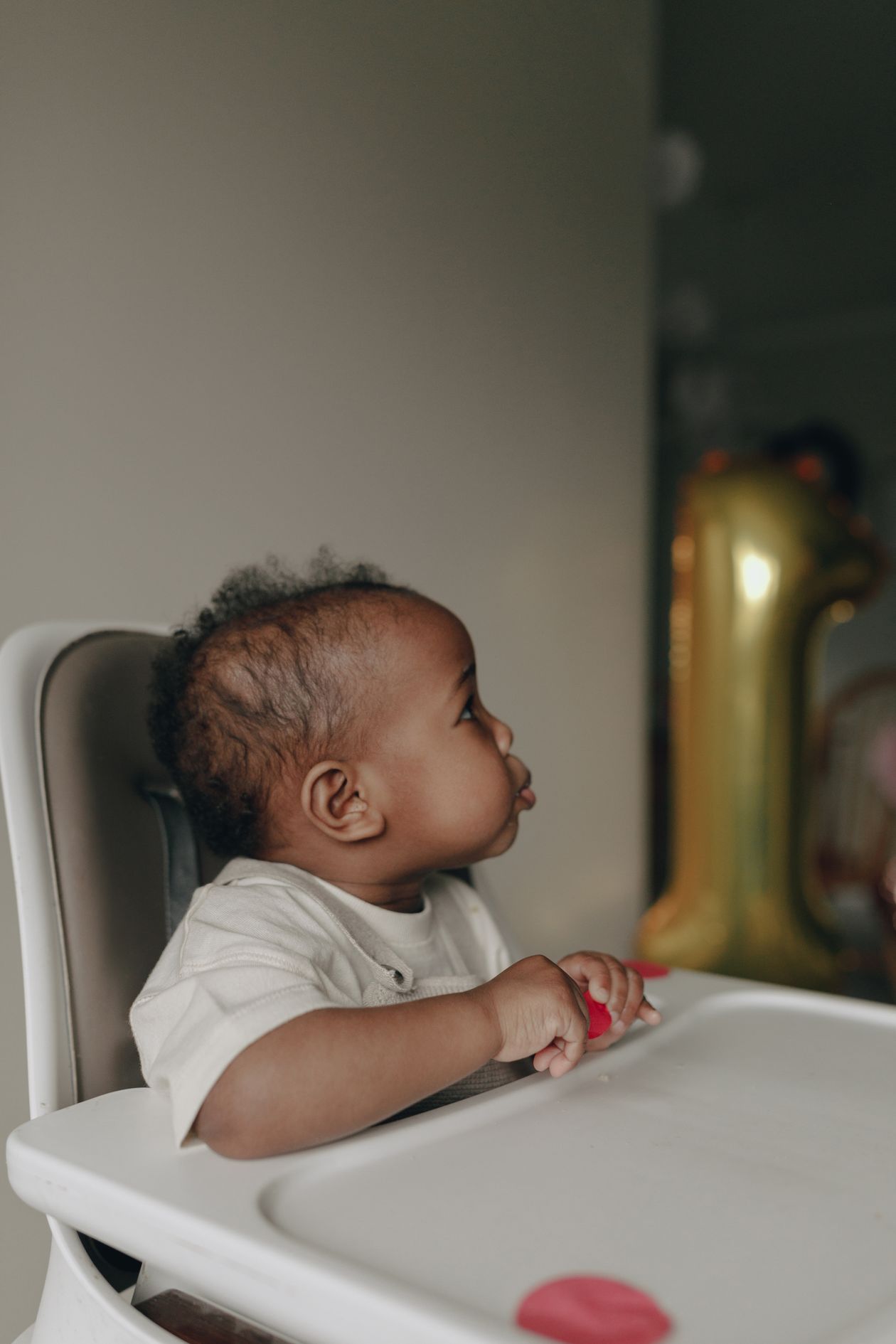
When can baby sit in a high chair? Most babies are ready to sit in a high chair at around 6 months, when they can hold their head steady, sit upright with little or no support, and are starting solid foods. Age alone is not the deciding factor: readiness depends on head and trunk control, so some babies are ready a little earlier and others a few weeks later.
A high chair puts your baby at the table for meals, which helps with feeding and makes family mealtimes more social. Sitting them up too early, though, can lead to slumping, which is uncomfortable and makes eating harder and less safe. Below we explain the readiness signs, high chair types, safety rules, how to position your baby properly, and what to do if your baby is not quite ready yet.
Quick Answer: Readiness Checklist
This table helps answer when can baby sit in a high chair based on milestones rather than age alone.
| Sign | What It Looks Like | Typical Age |
|---|---|---|
| Steady head control | Holds head upright without wobbling | 4–6 months |
| Sits with minimal support | Stays upright when placed sitting, maybe with hands on the floor | 5–7 months |
| Interest in food | Watches you eat, reaches for food, opens mouth | 4–6 months |
| Ready for solids | Pediatrician agrees baby can start solid foods | Around 6 months |
Why Sitting Ability Matters
A baby who slumps sideways or forward in a high chair cannot swallow as easily and may be at higher risk of choking. Good posture, with hips at the back of the seat, feet supported, and the trunk upright, helps babies chew, swallow, and explore food comfortably. The American Academy of Pediatrics notes that babies should be able to sit up with support and have good head control before starting solids. You can read more in the AAP’s guide to starting solid foods. So the honest answer to when can baby sit in a high chair is when their body is ready, not on a specific date.
Types of High Chairs
- Full-size high chairs: stand alone with a tray, often adjustable in height and recline.
- Convertible high chairs: transform into a booster or toddler chair as your child grows.
- Wooden or adjustable “grow-with-me” chairs: let babies sit at the family table with an adjustable footrest.
- Booster seats: strap onto a regular chair; best for older babies and toddlers.
- Hook-on or clip-on chairs: attach to the table, ideal for small spaces and travel.
For our top picks, see our guide to the best baby high chairs.
How to Position Your Baby Properly
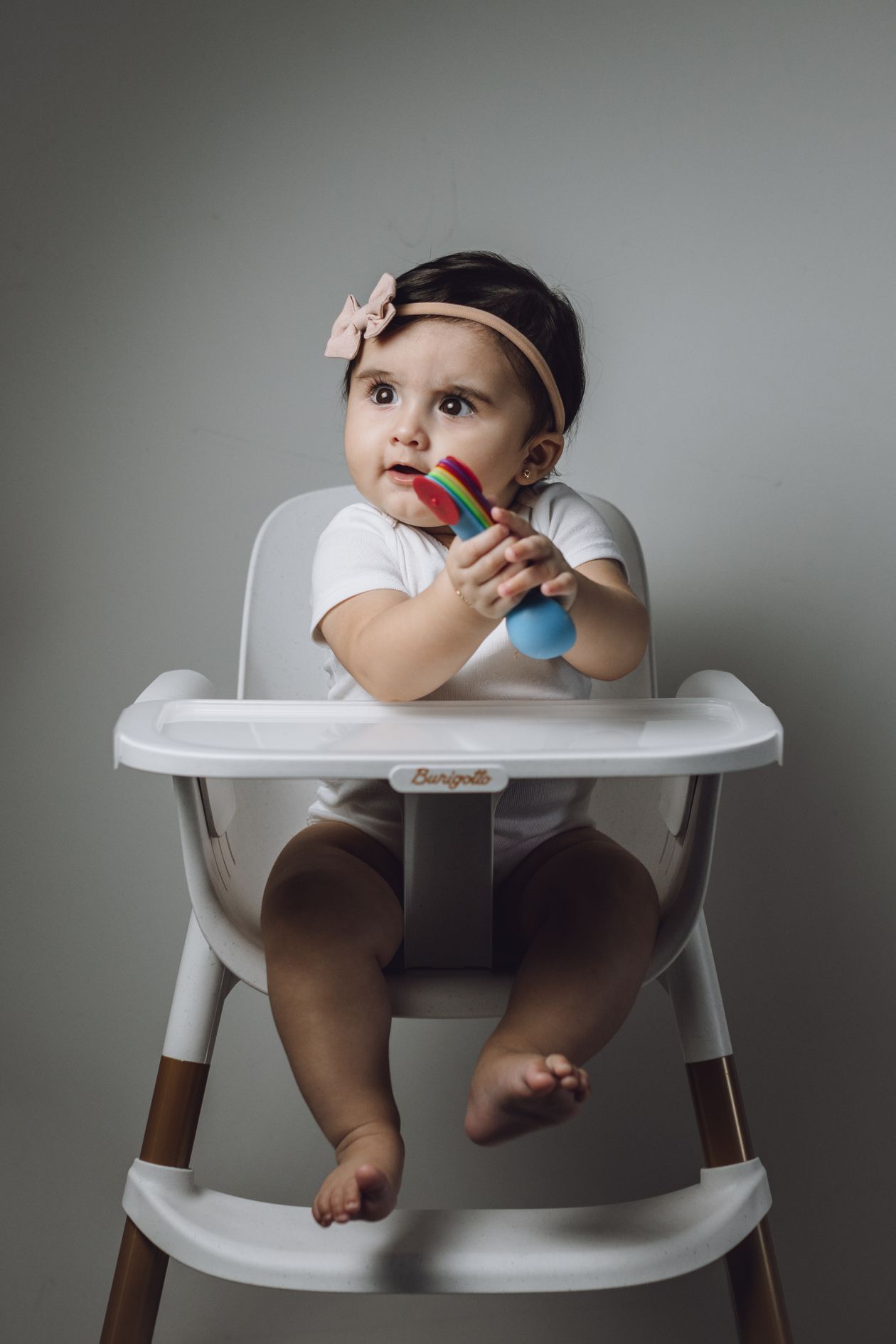
- Hips at the back of the seat and bent at about 90 degrees.
- Feet supported on a footrest, which improves stability and chewing.
- Tray at about belly-button height, so baby can reach food easily.
- Upright, not reclined, for eating; recline positions are for younger babies only when not feeding.
- Use rolled towels beside your baby for extra side support if the manufacturer allows it.
High Chair Safety Rules
- Always use the harness, ideally a five-point harness, even if a tray is attached.
- Never leave your baby unattended in a high chair.
- Place the chair away from walls, counters, and tables your baby could push off from.
- Lock wheels on chairs that have them.
- Check that the tray is secure before every meal.
- Follow weight limits and assembly instructions carefully.
- Register your high chair so you receive recall notices.
What If My Baby Is Not Ready Yet?
If your baby is 6 months old but still slumps, give them more practice sitting during floor play, supported tummy time, and time on your lap. You can feed them on your lap facing outward or in a supportive seat while they build strength. Most babies gain enough control within a few weeks. Talk to your pediatrician if you have concerns about motor development.
When Can Baby Sit in a High Chair Without Eating?
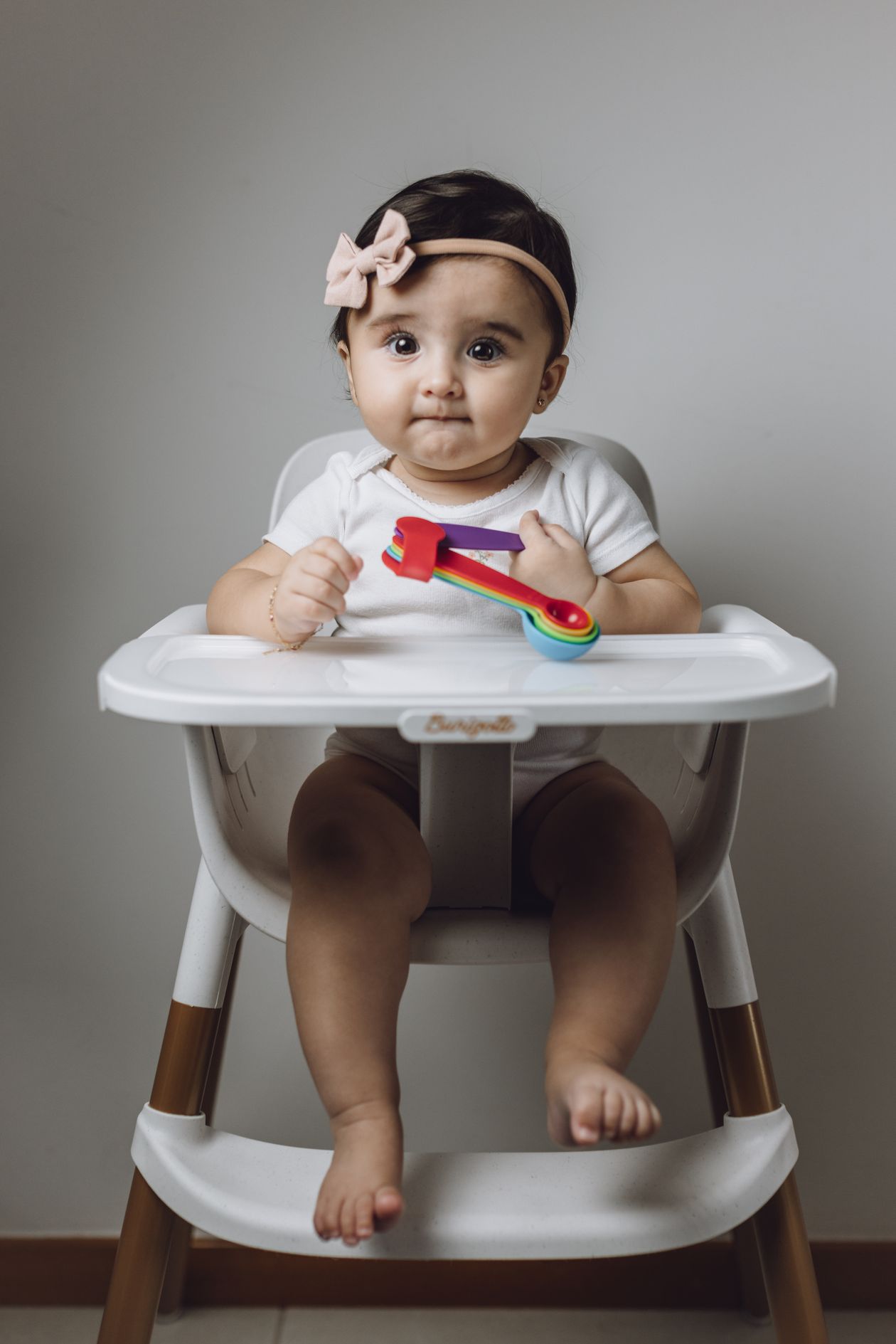
Some parents like to bring their baby to the table before solids begin, simply to join family meals. Many high chairs include a recline setting and newborn inserts for this purpose. If you do this, use the recline position the manufacturer specifies, keep the harness fastened, stay right beside your baby, and do not offer food until they are upright and ready. A bouncer seat on the floor nearby is another way to include younger babies at mealtimes. In this case, when can baby sit in a high chair depends on the chair’s age and weight guidelines rather than on feeding readiness.
Baby-Led Weaning and High Chairs
If you plan to follow baby-led weaning, where babies feed themselves soft finger foods from the start, good posture is even more important. Babies need to sit fully upright, lean slightly forward, and have their feet supported so they can move food around their mouth and cough effectively if a piece goes the wrong way. A chair with an adjustable footrest and a tray close to the body works best. Learn infant first aid and choking signs before starting, and always stay within arm’s reach during meals.
Choosing a High Chair for Your Family
Think about your space, cleaning, and long-term use. Trays and seats with few seams wipe clean more easily, and removable dishwasher-safe trays save time. Convertible and adjustable chairs last for years, while compact chairs fit small kitchens. Check that the harness is easy to adjust, the footrest is sturdy, and the chair folds or moves easily if you need it to. Matching the chair to your routine helps make the question of when can baby sit in a high chair easier when the day arrives.
Common Mistakes to Avoid
- Starting too early because of age alone, without checking sitting ability.
- Skipping the harness because the tray seems secure.
- Letting feet dangle, which reduces stability.
- Feeding in a reclined position, which increases choking risk.
- Placing the chair near a counter or wall your baby can push against.
Avoiding these mistakes makes mealtimes safer once you know when can baby sit in a high chair for your child.
Building Sitting Skills
Floor time is the best way to build the core strength babies need for sitting. A play mat gives a safe, clean space for tummy time, rolling, and supported sitting practice. Our guide on how long babies use a play mat explains how floor play supports milestones, and our best baby play mat picks can help you choose one.
A Practical Scenario: A Six-Month-Old Starting Solids
Imagine a baby who turns six months and has good head control but still wobbles a little when sitting. Her parents add a footrest, use the harness, and place rolled towels for side support as the manufacturer allows. After two weeks of practice, she sits steadily and enjoys her first finger foods. For them, the honest answer to when can baby sit in a high chair was about six and a half months.
Shop This Guide
If you decide this gear is right for your family, these links show current options and prices. Check reviews, age and weight limits, and recall status before you buy.
Want our top picks? Read our guide to the best baby high chair.
As an Amazon Associate, we earn from qualifying purchases at no extra cost to you.
Frequently Asked Questions
When can baby sit in a high chair for the first time?
Usually around 6 months, once they have steady head control and can sit with minimal support.
Can a 4-month-old sit in a high chair?
Generally no, unless your pediatrician advises otherwise; most 4-month-olds lack the trunk control needed.
Do I need a footrest on a high chair?
A footrest is strongly recommended because it improves stability and posture.
How long do babies use a high chair?
Most children use one until around 18 months to 3 years, then move to a booster seat or the table.
Is a booster seat better than a high chair?
Boosters suit older babies and toddlers; high chairs offer more support for young babies.
Final Thoughts: When Can Baby Sit in a High Chair?
When can baby sit in a high chair? Most babies are ready around 6 months, when they have steady head control, sit with minimal support, and are starting solids. Focus on readiness signs rather than age, position your baby with hips back and feet supported, always use the harness, and never leave them unattended.
Sources & Expert References
- American Academy of Pediatrics (HealthyChildren.org)
- CDC Child Safety & Injury Prevention
- CPSC Nursery Product Safety
- Before you buy: Check the current recall list at CPSC.gov/Recalls, especially for secondhand or older gear.

About the Author
TheBabyGearList Team
TheBabyGearList is an independent baby-gear site. We put each guide together from manufacturer specifications, safety standards and guidance (AAP, CPSC, NHTSA and JPMA), and patterns in verified buyer reviews. We use AI writing tools to help draft guides and review every guide before it goes live. We have not hands-on tested every product we mention, so please check the manufacturer's current instructions and limits before you buy or use any gear, and talk to your pediatrician about health questions. Spotted something out of date? Tell us through the Contact page.