- The Short Answer by Mat Type
- Stage 1: Newborn to 3 Months, Tummy Time Starts
- Stage 2: 3 to 6 Months, Reaching and Rolling
- Stage 3: 6 to 12 Months, Sitting and Crawling
- Stage 4: 12 Months and Beyond, Toddler Play
- How to Choose a Mat That Lasts
- Safety Tips for Every Stage
- A Practical Scenario: Getting Three Years From One Purchase
- Shop This Guide
- Frequently Asked Questions
- Final Thoughts: How Long Do Babies Use a Play Mat?
- Free Newborn Gear Checklist
- Everything you need before baby arrives — get the free printable checklist, straight to your inbox.
As an Amazon Associate, we earn from qualifying purchases linked in this post.
How long do babies use a play mat? Most babies use a play mat from the first weeks of life until somewhere between 12 and 18 months, and a thick foam floor mat often stays in use until age two or three. What changes along the way is how the mat gets used: it starts as a soft spot for short tummy-time sessions, becomes a rolling and reaching zone, and eventually turns into a padded floor for crawling, sitting, and early toddler play.
The exact timeline depends on the type of mat you buy. A baby activity gym with hanging toys has a much shorter useful life than a plain padded mat. Below we break down each stage, the signs your baby has outgrown a feature, and how to get the most value out of whatever mat you choose.

The Short Answer by Mat Type
Not all play mats are built for the same job, so it helps to separate them before answering how long do babies use a play mat in your home.
| Mat Type | Typical Use Window | Main Purpose |
|---|---|---|
| Activity gym with arches and hanging toys | 0–5 or 6 months | Tummy time, looking, batting at toys |
| Soft padded baby mat (no arches) | 0–12 months | Tummy time, rolling, sitting practice |
| Thick foam or roll-up floor mat | 3 months–3 years | Crawling, cushioning falls, toddler play |
| Interlocking foam tiles | 4 months–3 years+ | Large play zones, playroom flooring |
Stage 1: Newborn to 3 Months, Tummy Time Starts
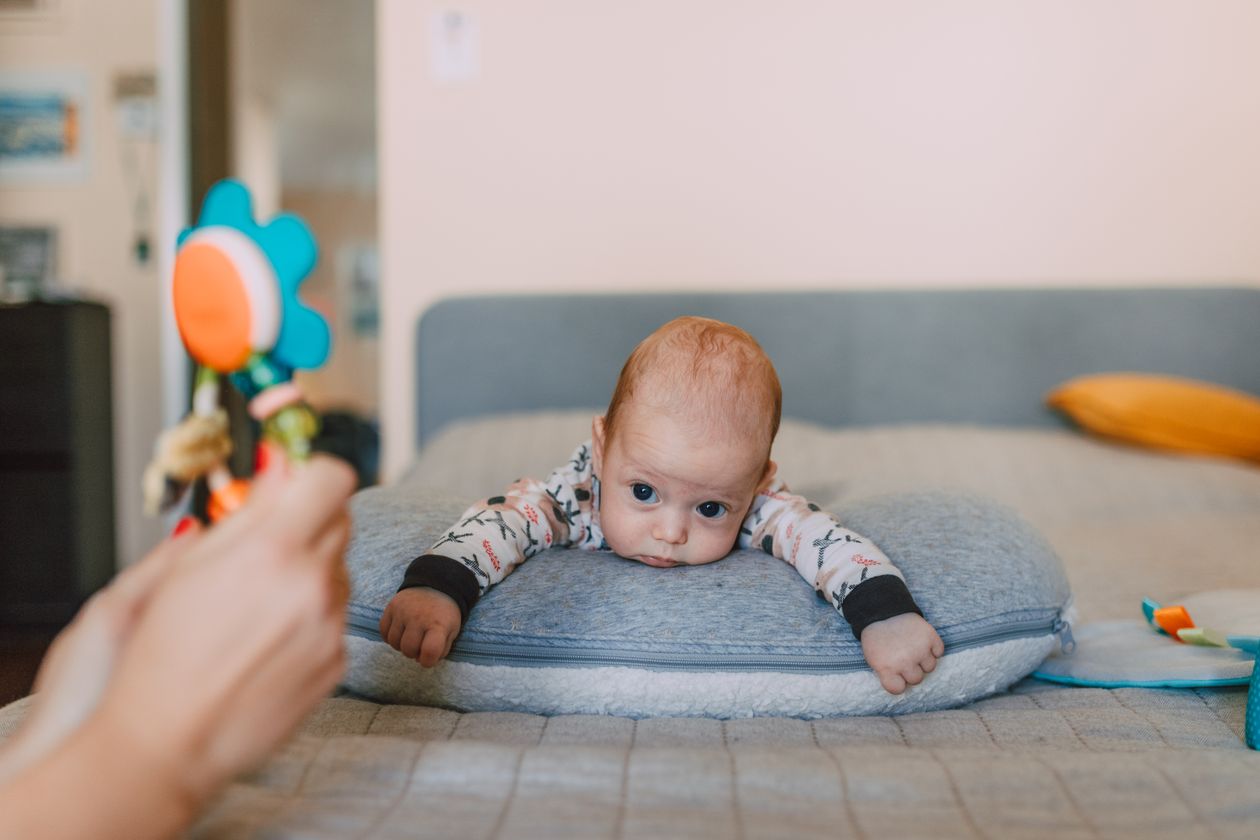
If you are asking how long do babies use a play mat, the clock starts almost immediately. Pediatricians recommend starting supervised tummy time from the early weeks, beginning with a few minutes at a time, several times a day, while your baby is awake and you are right there. The American Academy of Pediatrics explains the “back to sleep, tummy to play” approach in its guide to tummy time and safe sleep.
At this age, the mat gives your baby a clean, cushioned surface, and the high-contrast patterns or dangling toys of an activity gym give them something to look at while they work on lifting their head. Many babies dislike tummy time at first; short, frequent sessions on a comfortable mat make it easier for both of you.
Stage 2: 3 to 6 Months, Reaching and Rolling
This is the peak season for activity gyms. Babies start batting at toys, grabbing, and rolling from tummy to back and back to tummy. A mat with a little room to move is ideal, since rolling babies quickly travel off small mats.
Toward the end of this stage, the arches start to lose their appeal. Once your baby can roll well, sit with support, or grab and pull on hanging toys, it is time to take the arches down. A baby who can pull on an arch can also pull it over, so removing it is both a practical and a safety step. This is often the point when parents first wonder how long do babies use a play mat after the toys come off. The good news is that the mat itself still has plenty of life left.

Stage 3: 6 to 12 Months, Sitting and Crawling
In the second half of the first year, babies sit independently, pivot, scoot, and crawl. A padded mat gives them a softer place to topple over while they learn to balance. This is where a larger, thicker mat shines, and it is the stage that stretches how long do babies use a play mat well past the newborn months. Thin activity-gym pads are often too small and too flat for a crawling baby, while a roll-up foam mat or a set of interlocking tiles can cover a whole corner of the living room.
If you only buy one mat, a thick, wipeable floor mat usually gives the longest use. That is why the honest answer to how long do babies use a play mat is “longer than you might expect” when you pick the right kind.
Stage 4: 12 Months and Beyond, Toddler Play
For toddlers, how long do babies use a play mat becomes a question about the floor, not the baby. Once your child is walking, the mat becomes a play zone rather than a baby station. Toddlers sit on it to stack blocks, read books, or play with cars, and it softens the inevitable tumbles on hard floors. Many families keep a foam mat in a playroom until age three, especially in homes with tile or hardwood floors.
Eventually, children simply stop using it. A good sign that the mat has reached the end of its life is that your toddler plays everywhere except on it, or that the foam is torn, chewed, or permanently compressed.
How to Choose a Mat That Lasts
If you want one mat to cover as many stages as possible, look for these features:
- Enough size: at least about 4 by 6 feet so a rolling or crawling baby has room.
- Real cushioning: roughly half an inch to an inch of foam softens falls without becoming unstable.
- Wipeable surface: spit-up, drool, and snacks are guaranteed, so a waterproof, easy-clean top saves time.
- Non-slip backing: the mat should not slide when your baby pushes off it.
- Clear safety information: choose products with a stated age range and no small detachable parts.
Our roundup of the best baby play mats compares size, thickness, and cleaning ease if you are deciding between options.
Safety Tips for Every Stage
A play mat is for awake, supervised play. Never let your baby sleep on a play mat; if they doze off during tummy time, move them onto their back in a crib or bassinet with a fitted sheet only. If you are setting up that sleep space now, our guide on how many crib sheets you need covers the basics.
Keep the mat away from cords, furniture that can tip, and anything your baby could pull down. Check foam tiles regularly, because teething babies love to chew the edges, and small pieces can become a choking hazard. Replace damaged tiles right away.
A Practical Scenario: Getting Three Years From One Purchase
Picture a family that buys a basic activity gym for the newborn months, then adds a large foam mat around four months. The gym handles early tummy time and batting at toys. When the baby starts rolling off it and grabbing the arches, the gym is packed away, and the foam mat takes over for sitting and crawling. By the toddler years, the same foam mat lives under the toy shelf as a reading and building corner. That combination answers how long do babies use a play mat in a way that matches real life: one item for a few months, another for a few years.
Shop This Guide
If you decide this gear is right for your family, these links show current options and prices. Check reviews, age and weight limits, and recall status before you buy.
Want our tested picks? Read our guide to the best baby play mat.
As an Amazon Associate, we earn from qualifying purchases at no extra cost to you.
Frequently Asked Questions
How long do babies use a play mat with hanging toys?
Usually until about five or six months, or as soon as your baby can roll well, sit with support, or pull on the arches. After that, remove the arches and keep using the mat.
Can a newborn use a play mat?
Yes. Newborns can use a play mat for short, supervised tummy time sessions and for lying on their back to look at toys, as long as you stay right beside them.
Is a play mat necessary?
Not strictly. A clean blanket on the floor works for tummy time. A mat simply adds cushioning, easier cleanup, and often more interest for your baby.
How often should I clean a play mat?
Wipe it down whenever it gets messy and give it a full clean about once a week, following the manufacturer’s instructions.
When should I replace a foam mat?
Replace it when the foam is torn, chewed, flattened, or peeling, since damaged foam offers less protection and can create small pieces.
Final Thoughts: How Long Do Babies Use a Play Mat?
How long do babies use a play mat? An activity gym with arches typically lasts until five or six months, a padded baby mat until around the first birthday, and a thick foam floor mat often until age two or three. Start early with short tummy time, take the arches down once your baby can pull on them, and upgrade to a larger, thicker mat as they crawl. Choose well, and this is one baby purchase that keeps earning its keep long after the newborn stage.
Sources & Expert References
- American Academy of Pediatrics (HealthyChildren.org)
- CDC Child Safety & Injury Prevention
- CPSC Nursery Product Safety
- Before you buy: Check the current recall list at CPSC.gov/Recalls, especially for secondhand or older gear.

About the Author
Sarah Bennett
Sarah Bennett runs product testing for TheBabyGearList. She has three kids of her own (ages 7, 4, and 1), which means she has bought, returned, and worn out more strollers, car seats, and baby monitors than she can count. Every review on this site starts from a real comparison: she buys or borrows the top options in a category, uses them for at least two weeks with her own kids, and writes down the specific things that broke, annoyed her, or worked better than expected. Before this she spent four years as a product safety reviewer for a parenting magazine, checking car seat and crib listings against CPSC recall data. She lists the cheapest option that actually holds up first, and skips products she wouldn't put her own kids in.