- Quick Answer: Who Needs One
- How Families Use a Play Yard
- How Long Do Babies Use a Play Yard?
- Safe Sleep in a Play Yard
- Play Yard Safety Tips
- Features to Compare
- Play Yard vs. Baby Gates and Playpens
- Using a Play Yard for Travel
- When You Can Skip It
- Common Mistakes to Avoid
- Shop This Guide
- A Practical Scenario: The Two-Story House
- Frequently Asked Questions
- Final Thoughts: Do You Need a Baby Play Yard?
- Free Newborn Gear Checklist
- Everything you need before baby arrives — get the free printable checklist, straight to your inbox.
As an Amazon Associate, we earn from qualifying purchases linked in this post.
Do you need a baby play yard? For many families, yes. A play yard, sometimes called a playpen or portable crib, gives your baby a safe, enclosed space to sleep, nap, or play, and it folds up for travel. It is especially useful if you live in a multi-level home, travel often, need a safe spot while you shower or cook, or want a bedside sleep space for the early months. If your home is small, fully baby-proofed, and you rarely travel, you may manage without one.
Play yards are among the most versatile pieces of baby gear because they can serve as a bassinet, changing station, travel crib, and contained play area at different stages. Below we explain how families use them, how long they last, safety rules for sleep and play, features to compare, and when you can skip one, so you can make the right call for your home.

Quick Answer: Who Needs One
This table gives a quick answer to do you need a baby play yard based on your lifestyle.
| Situation | Play Yard Useful? | Why |
|---|---|---|
| Frequent travel or grandparent visits | Yes | Portable, safe sleep space anywhere |
| Multi-level home | Yes | Downstairs nap and play spot |
| Need hands-free time to cook or shower | Yes | Safe containment for a mobile baby |
| Small apartment, no travel | Maybe | A crib and baby gates may be enough |
| Already own a travel crib and bassinet | Probably not | Functions are covered |
How Families Use a Play Yard
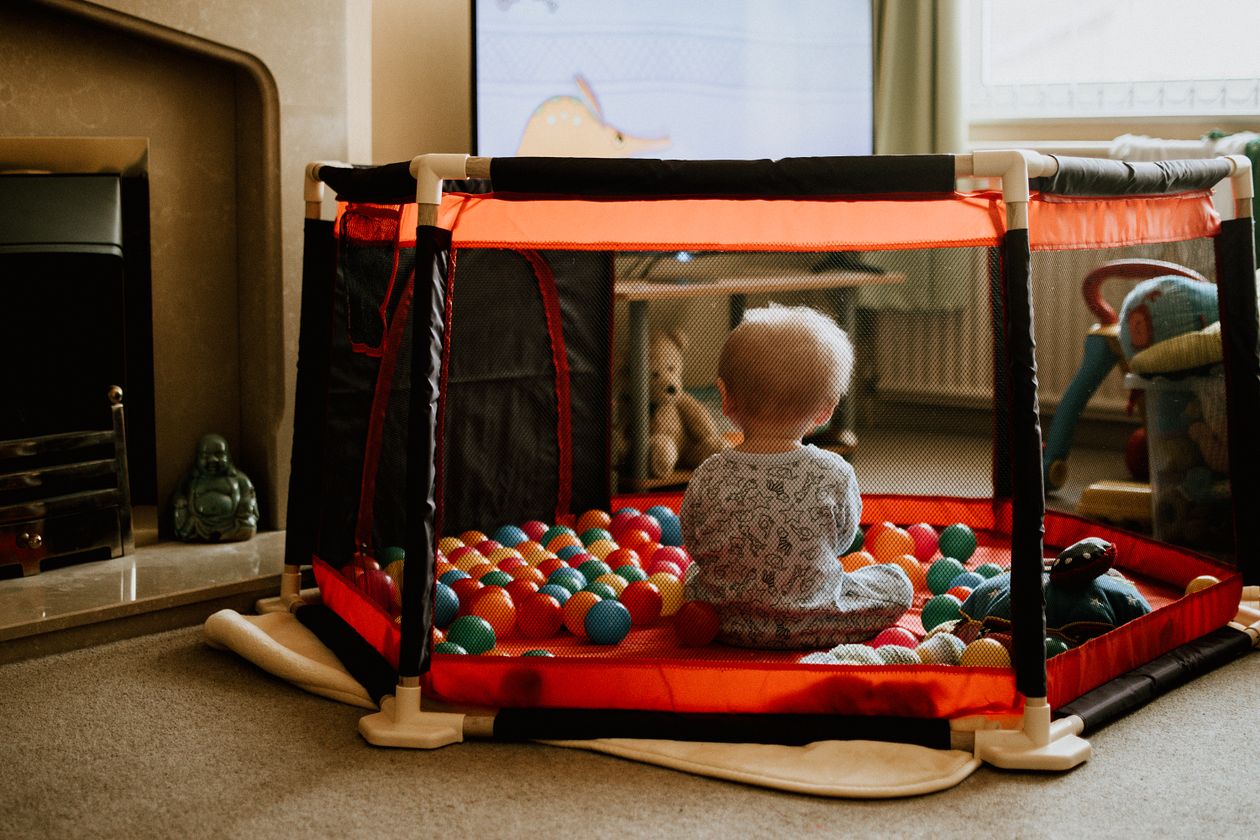
In the newborn months, many play yards include a raised bassinet insert that lets you keep your baby close to your bed or in the living room for naps. Some also have a changing table attachment, so you can set up a downstairs diaper station without buying extra furniture. Once your baby outgrows the bassinet insert, the full-depth play yard works as a portable crib for naps, overnight stays, and vacations.
When your baby starts rolling, crawling, and pulling up, a play yard becomes a safe spot where they can play with toys while you answer the door, cook dinner, or take a quick shower. This containment is a big reason why many parents answer yes to do you need a baby play yard, even when they already own a full-size crib.
How Long Do Babies Use a Play Yard?
Bassinet inserts usually have a weight limit around 15 to 20 pounds or until your baby can push up on hands and knees or roll over, whichever comes first. The main play yard is generally used until your child is about 35 inches tall or can climb out, which often happens between 2 and 3 years. Always check the specific limits in your model’s manual.
Safe Sleep in a Play Yard
Play yards that meet federal safety standards are safe for sleep when used correctly. Use only the mattress pad that came with the play yard, never add extra mattresses or pillows, and keep blankets, bumpers, and soft toys out. Place your baby on their back for every sleep. The U.S. Consumer Product Safety Commission warns that adding aftermarket mattresses to play yards has been linked to infant deaths, so stick with the original pad or a replacement made specifically for your model.
Play Yard Safety Tips
- Lock all sides fully before placing your baby inside.
- Remove the bassinet insert once your baby reaches its limits.
- Remove the changing table before your baby is inside.
- Keep cords, blinds, and furniture away from the play yard.
- Do not leave large toys that can be used as steps once your baby can stand.
- Check for recalls and register your play yard.
Features to Compare
Play yards range from simple, lightweight travel models to feature-packed versions with bassinets, changers, organizers, and music. Think about where and how you will use it most. A heavy, feature-rich model is great as a permanent downstairs station, while a light, quick-folding model is better for frequent travel. Our guide to the best travel cribs compares portable options in detail.
- Bassinet insert for newborns.
- Changing table attachment.
- Weight and fold size for travel.
- Easy setup and one-hand fold.
- Breathable mesh sides for visibility and airflow.
- Wheels for moving between rooms.

Play Yard vs. Baby Gates and Playpens
A play yard is not the only way to create a safe play area. Freestanding panel playpens or baby gates can section off a larger area of a room, giving your baby more space to move and explore. These work well in homes with room to spare, but they do not double as a sleep space.
If you want one product that handles sleep, travel, and play, a play yard is the most efficient choice. If you mainly want a large play area, panels may be better. Weighing these uses is the clearest way to answer do you need a baby play yard for your family.
Using a Play Yard for Travel
Hotels and rentals often provide cribs, but quality and cleanliness vary, and some are older models. Bringing your own play yard means your baby sleeps in a familiar space with the same sheet and smell from home, which can make naps and nights in a new place much easier. Practice setting it up and folding it at home a few times before your trip, since a tired parent in a dark hotel room is not the best time to learn. If you fly, many airlines check play yards free of charge as baby gear.
For families who visit grandparents regularly, leaving a play yard at their home is another popular option. It saves packing every time and gives grandparents a safe place for naps when they babysit. That kind of regular use is often what settles do you need a baby play yard in favor of buying one.
When You Can Skip It
You may not need a play yard if your baby sleeps in a bedside bassinet and crib, you rarely travel overnight, your home is on a single level, and you have a well baby-proofed room or playpen panels. Some parents also borrow a play yard for occasional trips rather than buying one. Asking do you need a baby play yard is really asking how often you need a portable, safe space away from the nursery.
Common Mistakes to Avoid
- Adding a thick aftermarket mattress for comfort.
- Using the bassinet insert too long.
- Leaving sides partly unlocked.
- Using it as a toy bin that crowds the baby.
Shop This Guide
If you decide this gear is right for you, these links show current options and prices. Check reviews, size and weight limits, and recall status before you buy.
Want our top picks? Read our guide to the best travel crib.
As an Amazon Associate, we earn from qualifying purchases at no extra cost to you.
A Practical Scenario: The Two-Story House
Imagine parents in a two-story home whose nursery is upstairs. During the day, carrying their newborn up and down for every nap and diaper change is exhausting. They set up a play yard with a bassinet and changing attachment in the living room. At eight months, the bassinet comes out and the play yard becomes a safe play space while they cook, and it travels to the grandparents’ house for weekends. For them, the answer to do you need a baby play yard was clearly yes.
Frequently Asked Questions
Do you need a baby play yard?
It is very useful for travel, multi-level homes, and safe play, but optional if you have other sleep and play spaces.
Is it safe for a baby to sleep in a play yard every night?
Yes, if it meets safety standards and you use only the original mattress pad with no soft bedding.
Until what age can a child use a play yard?
Usually until about 35 inches tall or when they can climb out.
Can I add a mattress to a play yard?
Only a replacement made specifically for your model; never add extra padding.
Final Thoughts: Do You Need a Baby Play Yard?
Do you need a baby play yard? For many families it is one of the most useful purchases, covering newborn naps, diaper changes, safe play, and travel sleep in one foldable product. If you rarely travel and already have a crib, bassinet, and safe play area, you can skip it or borrow one. Whatever you decide, follow the manual and safe sleep rules every time.
Sources & Expert References
- American Academy of Pediatrics (HealthyChildren.org)
- CDC Child Safety & Injury Prevention
- CPSC Nursery Product Safety
- Before you buy: Check the current recall list at CPSC.gov/Recalls, especially for secondhand or older gear.

About the Author
TheBabyGearList Team
TheBabyGearList is an independent baby-gear site. We put each guide together from manufacturer specifications, safety standards and guidance (AAP, CPSC, NHTSA and JPMA), and patterns in verified buyer reviews. We use AI writing tools to help draft guides and review every guide before it goes live. We have not hands-on tested every product we mention, so please check the manufacturer's current instructions and limits before you buy or use any gear, and talk to your pediatrician about health questions. Spotted something out of date? Tell us through the Contact page.