- Quick Answer by Age
- Readiness Signs
- Why Shopping Carts Are Risky
- Shopping With a Baby Under 6 Months
- How to Use the Cart Seat Safely
- Shopping Cart Covers
- Alternatives to the Cart
- Tips for Smoother Shopping Trips
- When Can a Baby Sit in a Shopping Cart With Twins or Siblings?
- Germs and Hygiene
- What If the Cart Seat Has No Belt?
- Common Mistakes to Avoid
- Shop This Guide
- A Practical Scenario: A First Solo Grocery Run
- Frequently Asked Questions
- Final Thoughts: When Can a Baby Sit in a Shopping Cart?
- Free Newborn Gear Checklist
- Everything you need before baby arrives — get the free printable checklist, straight to your inbox.
As an Amazon Associate, we earn from qualifying purchases linked in this post.
When can a baby sit in a shopping cart? Most babies are ready to sit in a shopping cart’s child seat at around 6 to 9 months, once they can sit upright on their own with steady head and trunk control. Before that, keep younger babies in a carrier, a stroller, or a cart with a built-in infant seat designed for newborns. Never place an infant car seat on top of the cart’s child seat, because it can tip and fall.
Shopping carts are a surprisingly common source of injuries for young children. Falls from the cart, carts tipping over, and children climbing in the basket send thousands of kids to emergency rooms every year. Below we explain the readiness signs, safe ways to shop with younger babies, how to use the cart seat safely, alternatives to carts, and practical gear that makes shopping trips easier.
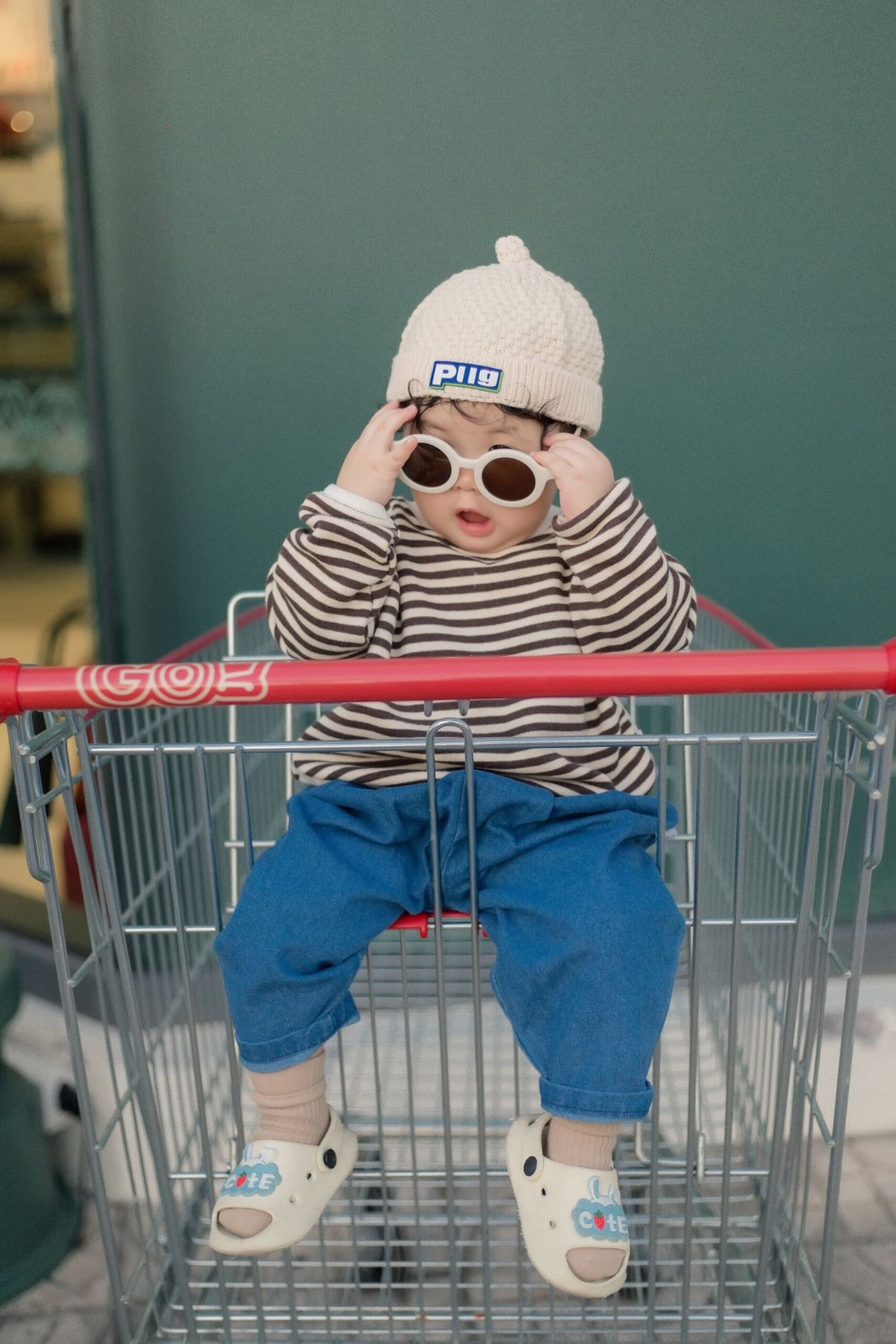
Quick Answer by Age
This table gives a quick answer to when can a baby sit in a shopping cart and safe alternatives at each stage.
| Age | Cart Seat? | Safer Option |
|---|---|---|
| 0–6 months | No | Baby carrier, stroller, or cart with built-in infant seat |
| 6–9 months | Yes, if sitting steadily alone | Cart seat with safety belt fastened |
| 9 months–3 years | Yes | Cart seat with belt, never standing or in the basket |
| Walking toddlers | Optional | Walking beside the cart while holding on |
Readiness Signs
- Sits without support for several minutes.
- Holds head steady when the cart moves and turns.
- Does not slump sideways or forward in the seat.
- Fits the leg openings comfortably without slipping down.
If your baby still wobbles or slides down, wait a few weeks and use a carrier or stroller instead. That is the safest answer to when can a baby sit in a shopping cart for your child.
Why Shopping Carts Are Risky
Carts have a high center of gravity, especially when a child sits in the seat and the basket is lightly loaded. Children can stand up, lean out, or climb into the basket, and carts can tip on uneven pavement or ramps. Falls often involve head injuries. Pediatric safety experts recommend using the safety belt every time, never letting children ride in the basket or on the outside of the cart, and staying with the cart at all times. The AAP shares practical advice in its shopping cart safety tips.
Shopping With a Baby Under 6 Months
For young babies, the safest options are a soft carrier or wrap worn on your chest, a stroller you push alongside a hand basket, or a cart that has a built-in, reclined infant seat designed for babies. Placing an infant car seat on top of the cart’s fold-down child seat is not safe, even if it seems to click into place, because the seat is not designed to hold it and can fall. Some stores offer carts with integrated infant seats or a separate area for car seats inside the basket.
How to Use the Cart Seat Safely
- Wipe the handle and seat with a sanitizing wipe if available.
- Place your baby with legs through the openings.
- Fasten the safety belt snugly every time, even for short trips.
- Load heavy items low in the basket to improve stability.
- Stay with the cart and keep a hand on it.
- Avoid ramps and curbs where carts can tip.
- Never let children stand, ride in the basket, or hang on the sides.
Shopping Cart Covers
A padded shopping cart cover can make the seat more comfortable, add a layer between your baby and a germy cart, and help smaller babies sit more snugly. Choose one with its own safety belt slots so the store belt still fits, and remember that a cover does not replace the cart belt or supervision. Covers fold into a pouch for the diaper bag; see our guide on whether you need a diaper bag for packing ideas.
Alternatives to the Cart
- Baby carrier: keeps babies close and calm, and your hands free.
- Stroller: push a stroller and carry a hand basket for small trips.
- Online ordering and curbside pickup: avoids long trips with a tired baby.
- Shop with another adult who can focus on the child.
For carrier positions, see when babies can face forward in a carrier.
Tips for Smoother Shopping Trips
- Shop after naps and meals, when babies are calmer.
- Bring a small toy or snack for older babies.
- Keep trips short and use a list.
- Talk about what you see, which entertains and builds language.
- Plan a quick exit if your baby becomes overtired.
When Can a Baby Sit in a Shopping Cart With Twins or Siblings?
With twins, one baby can sit in the cart seat once ready while the other rides in a carrier, or you can look for stores with double-seat carts. With an older sibling, keep the toddler walking beside you holding the cart, never riding on the outside or in the basket. The basic rule for when can a baby sit in a shopping cart stays the same: steady independent sitting and a fastened belt.
Germs and Hygiene
Cart handles and seats are touched by many people every day. Wipe the handle and seat before use, wash or sanitize your hands after shopping, and offer teething babies their own toy rather than letting them chew on the cart. A washable cart cover makes this easier and gives your baby a familiar, comfortable seat. These small habits make the whole experience calmer once you know when can a baby sit in a shopping cart for your child.
What If the Cart Seat Has No Belt?
Choose a different cart. Safety belts are often missing or broken, and a seat without a working belt is not safe for a baby or toddler. If no cart has a working belt, use a carrier or stroller instead, or bring a cart cover that includes its own harness.
Common Mistakes to Avoid
- Balancing an infant car seat on top of the cart seat.
- Skipping the safety belt because it is broken or missing; choose another cart.
- Letting toddlers ride in the basket or stand up.
- Walking away from the cart, even briefly.
Shop This Guide
If you decide this gear is right for your family, these links show current options and prices. Check reviews, age and weight limits, and recall status before you buy.
Want our top picks? Read our guide to the best baby carrier.
As an Amazon Associate, we earn from qualifying purchases at no extra cost to you.
A Practical Scenario: A First Solo Grocery Run
Imagine a parent with a 4-month-old heading to the grocery store alone. They wear their baby in a soft carrier, use a smaller cart for groceries, and keep the trip under 30 minutes. At 7 months, once their baby sits steadily, they switch to the cart seat with a padded cover and the belt fastened. For them, the honest answer to when can a baby sit in a shopping cart was 7 months.
Frequently Asked Questions
When can a baby sit in a shopping cart seat?
Usually around 6 to 9 months, once they can sit steadily without support.
Can I put my infant car seat on the shopping cart?
No. Car seats are not designed to sit on cart seats and can fall.
Are shopping cart covers worth it?
They add comfort and cleanliness, but you still need the cart belt and supervision.
Can toddlers ride in the cart basket?
No. Children should only sit in the seat with the belt fastened.
Final Thoughts: When Can a Baby Sit in a Shopping Cart?
When can a baby sit in a shopping cart? Most babies are ready around 6 to 9 months, once they sit steadily on their own. Before that, use a carrier, stroller, or built-in infant cart seat, never a car seat balanced on top. Always fasten the belt, stay with the cart, keep children out of the basket, and keep trips short and calm.
Sources & Expert References
- American Academy of Pediatrics (HealthyChildren.org)
- CDC Child Safety & Injury Prevention
- CPSC Nursery Product Safety
- Before you buy: Check the current recall list at CPSC.gov/Recalls, especially for secondhand or older gear.

About the Author
TheBabyGearList Team
TheBabyGearList is an independent baby-gear site. We put each guide together from manufacturer specifications, safety standards and guidance (AAP, CPSC, NHTSA and JPMA), and patterns in verified buyer reviews. We use AI writing tools to help draft guides and review every guide before it goes live. We have not hands-on tested every product we mention, so please check the manufacturer's current instructions and limits before you buy or use any gear, and talk to your pediatrician about health questions. Spotted something out of date? Tell us through the Contact page.