- Quick Answer: Signs It Is Time to Switch
- Why Limits Matter More Than Age
- Keep Rear-Facing as Long as Possible
- Can You Switch Early?
- Choosing a Convertible Car Seat
- Installation Tips
- Common Mistakes to Avoid
- When to Switch to a Convertible Car Seat for Travel
- Twins, Small Cars, and Multiple Children
- What Happens After the Convertible Seat?
- Buying Before You Need It
- Shop This Guide
- A Practical Scenario: An 11-Month-Old Growth Spurt
- Frequently Asked Questions
- Final Thoughts: When to Switch to a Convertible Car Seat
- Free Newborn Gear Checklist
- Everything you need before baby arrives — get the free printable checklist, straight to your inbox.
As an Amazon Associate, we earn from qualifying purchases linked in this post.
When to switch to a convertible car seat? Switch from an infant car seat to a convertible car seat when your baby reaches the infant seat’s height or weight limit, whichever comes first. For many babies this happens between about 9 and 18 months, but it depends on the seat and your child’s growth, not on age. A common sign is when your baby’s head is within one inch of the top of the infant seat shell, or when they exceed the seat’s maximum weight or length.
Many parents wonder whether they should switch earlier for convenience or wait until the last moment. The good news is that convertible seats are designed to be used rear-facing from a young age, so there is flexibility. Below we explain the signs your baby has outgrown the infant seat, how to keep rear-facing safely, what to look for in a convertible seat, installation tips, and common mistakes to avoid.

Quick Answer: Signs It Is Time to Switch
This table gives a quick answer to when to switch to a convertible car seat based on clear signs.
| Sign | What It Means | What to Do |
|---|---|---|
| Head within 1 inch of shell top | Not enough head protection | Switch to a convertible seat, rear-facing |
| Weight above seat limit | Seat no longer rated for your baby | Switch now |
| Length above seat limit | Seat no longer fits safely | Switch now |
| Harness below shoulders cannot be achieved | Harness fit is unsafe for rear-facing | Check manual; usually time to switch |
| Seat too heavy to carry | Convenience issue only | Switching early is fine if the convertible fits your baby |
Why Limits Matter More Than Age
Every infant seat has its own height and weight limits, printed on labels and in the manual. Some infant seats fit babies up to 30 or 35 pounds and 30 to 32 inches, while others have lower limits. Two babies the same age can outgrow seats months apart. That is why the answer to when to switch to a convertible car seat always starts with your specific seat’s limits and your baby’s measurements. The U.S. National Highway Traffic Safety Administration’s car seat guidance explains how to choose and use the right seat at every stage.
Keep Rear-Facing as Long as Possible
Switching to a convertible seat does not mean turning forward. The American Academy of Pediatrics recommends keeping children rear-facing as long as possible, until they reach the highest weight or height allowed by their convertible seat for rear-facing. Many convertible seats allow rear-facing up to 40 or 50 pounds, so most children can stay rear-facing well past age two. Rear-facing seats spread crash forces across the back, head, and neck, which offers important protection for young children.
Can You Switch Early?
Yes. Some parents switch before the infant seat is outgrown because the carrier becomes heavy or the car seat base does not fit well. That is perfectly safe as long as the convertible seat is rated for your baby’s weight and height in rear-facing mode and fits them correctly. You lose the convenience of clicking the carrier into a stroller, but you gain a seat that lasts for years.
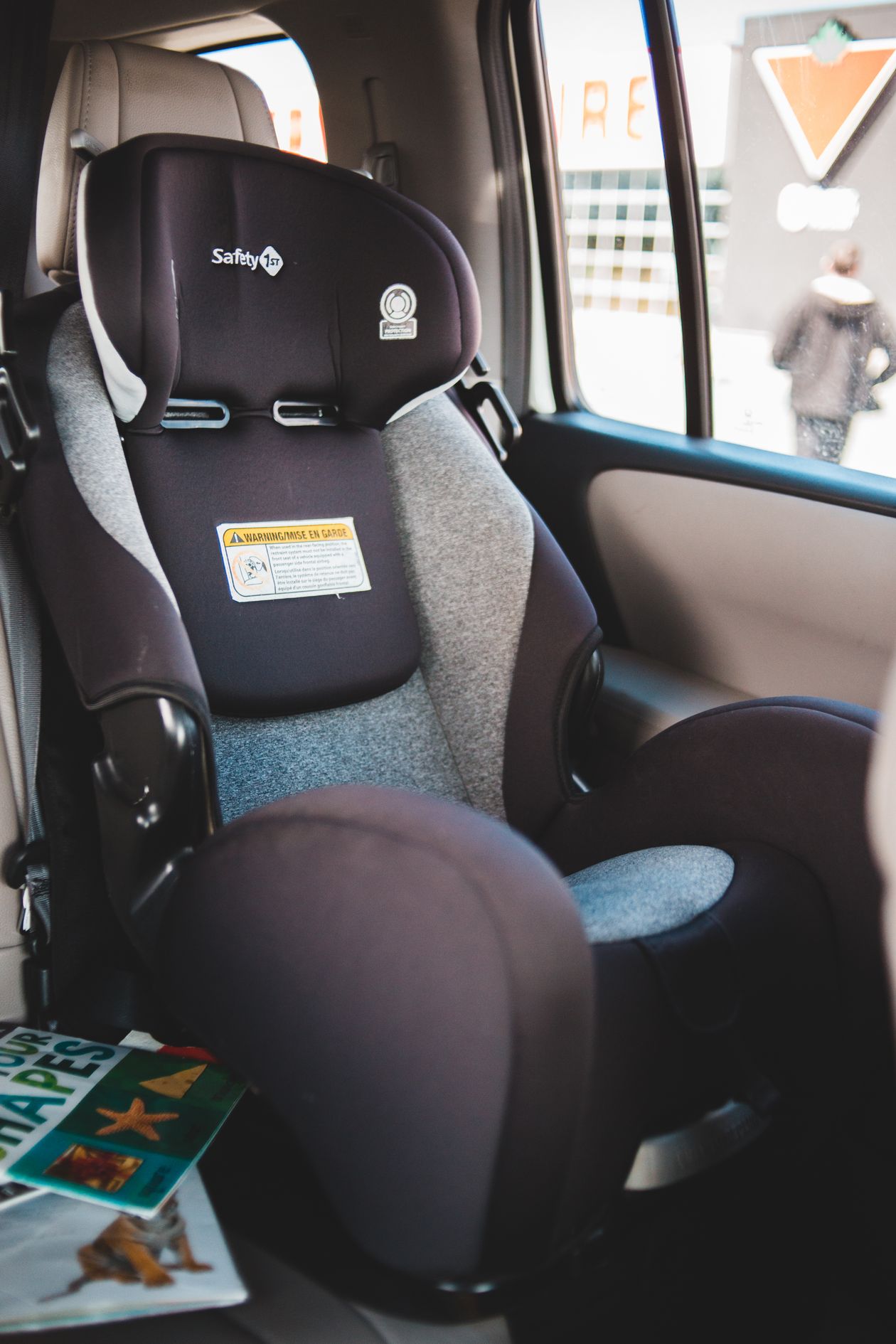
Choosing a Convertible Car Seat
- High rear-facing limits: look for 40 to 50 pounds rear-facing.
- Fit in your car: check that it fits rear-facing without crowding the front seat.
- Easy installation: clear level indicators and lock-offs for seat belt installs.
- Adjustable harness and headrest: no-rethread harnesses make adjustments easier.
- Washable cover for inevitable spills.
- Expiration date: seats expire, often after 6 to 10 years.
Compare options in our guide to the best convertible car seats and our explainer on convertible vs. infant car seats.
Installation Tips
- Read both manuals: the car seat manual and your vehicle manual.
- Choose LATCH or seat belt, not both, unless the manual allows it.
- Check the recline angle using the seat’s indicator.
- Do the inch test: the seat should not move more than one inch side to side at the belt path.
- Adjust the harness: for rear-facing, straps at or below the shoulders, chest clip at armpit level, and no slack (pinch test).
- Get a check: many communities offer free inspections by certified child passenger safety technicians.
Common Mistakes to Avoid
- Turning forward-facing too early just because your child has switched seats.
- Switching based on age rather than limits and fit.
- Bulky coats under the harness, which leave dangerous slack.
- Using a secondhand seat with an unknown crash history or past its expiration date.
- Loose installation that fails the inch test.

When to Switch to a Convertible Car Seat for Travel
Families who fly often may prefer a lightweight convertible seat approved for aircraft use, which lets your child ride in their own seat on the plane. Look for the FAA approval label. Some families keep their infant seat for travel while a heavier convertible stays in the car. Either way, the core rule for when to switch to a convertible car seat is the same: follow the limits and keep your child rear-facing.
Twins, Small Cars, and Multiple Children
Families with twins or several young children often face space challenges. Narrow convertible seats can make it possible to fit three across in some vehicles, and seats with compact rear-facing profiles help in small cars. Measure your back seat before buying, and check whether the seat can be installed in the center position, which is often the safest spot if a secure installation is possible. Space limits do not change when to switch to a convertible car seat, but they do affect which seat you choose.
What Happens After the Convertible Seat?
After many years rear-facing and then forward-facing with a harness, children eventually move to a belt-positioning booster seat and finally to the vehicle seat belt alone. Each step depends on size and maturity rather than age. Planning ahead helps, but the most important stage right now is understanding when to switch to a convertible car seat and keeping your child rear-facing within its limits.
Buying Before You Need It
It is smart to buy your convertible seat a few weeks before your baby outgrows the infant seat, so you have time to install it, read the manual, and get it checked. Register the seat with the manufacturer so you receive recall notices. Some parents skip the infant seat entirely and use a convertible from birth, which is safe if the seat fits newborns well.
Shop This Guide
If you decide this gear is right for your family, these links show current options and prices. Check reviews, age and weight limits, and recall status before you buy.
- Convertible car seats with high rear-facing limits on Amazon →
- Lightweight travel convertible seats on Amazon →
Want our top picks? Read our guide to the best convertible car seat.
As an Amazon Associate, we earn from qualifying purchases at no extra cost to you.
A Practical Scenario: An 11-Month-Old Growth Spurt
Imagine an 11-month-old whose head is now just under an inch from the top of his infant seat shell, even though he is still under the weight limit. His parents buy a convertible seat with a 50-pound rear-facing limit, install it rear-facing, and have it checked at a local fire station. For them, the honest answer to when to switch to a convertible car seat was 11 months, driven by height.
Frequently Asked Questions
When to switch to a convertible car seat for most babies?
When your baby reaches the infant seat’s height or weight limit, often between 9 and 18 months.
Should my baby face forward in the convertible seat?
No. Keep them rear-facing until they reach the seat’s rear-facing limits.
Can I use a convertible seat from birth?
Yes, if the seat is rated for newborns and fits your baby well.
Are legs touching the back seat a problem?
No. Children sit comfortably with bent legs, and it is not a reason to turn forward.
Final Thoughts: When to Switch to a Convertible Car Seat
When to switch to a convertible car seat? When your baby reaches the infant seat’s height or weight limit, or earlier if a convertible fits them well and suits your family. Keep your child rear-facing as long as the seat allows, install it carefully, avoid bulky coats under the harness, and get a free inspection for peace of mind.
Sources & Expert References
- American Academy of Pediatrics (HealthyChildren.org)
- CDC Child Safety & Injury Prevention
- CPSC Nursery Product Safety
- Before you buy: Check the current recall list at CPSC.gov/Recalls, especially for secondhand or older gear.

About the Author
TheBabyGearList Team
TheBabyGearList is an independent baby-gear site. We put each guide together from manufacturer specifications, safety standards and guidance (AAP, CPSC, NHTSA and JPMA), and patterns in verified buyer reviews. We use AI writing tools to help draft guides and review every guide before it goes live. We have not hands-on tested every product we mention, so please check the manufacturer's current instructions and limits before you buy or use any gear, and talk to your pediatrician about health questions. Spotted something out of date? Tell us through the Contact page.