- Quick Answer by Age
- Why Many Parents Wait Until Six Months
- Water Temperature
- Chlorine, Skin, and Eyes
- Swim Diapers
- Sun Safety
- Water Safety Rules
- Baby Swim Lessons
- Public Pools, Hotel Pools, and Home Pools
- Kiddie Pools and Splash Pads
- Signs Your Baby Has Had Enough
- What to Pack for the Pool
- A Practical Scenario: A First Swim at Seven Months
- Shop This Guide
- Frequently Asked Questions
- Final Thoughts: When Can Babies Go in a Pool?
- Free Newborn Gear Checklist
- Everything you need before baby arrives — get the free printable checklist, straight to your inbox.
As an Amazon Associate, we earn from qualifying purchases linked in this post.
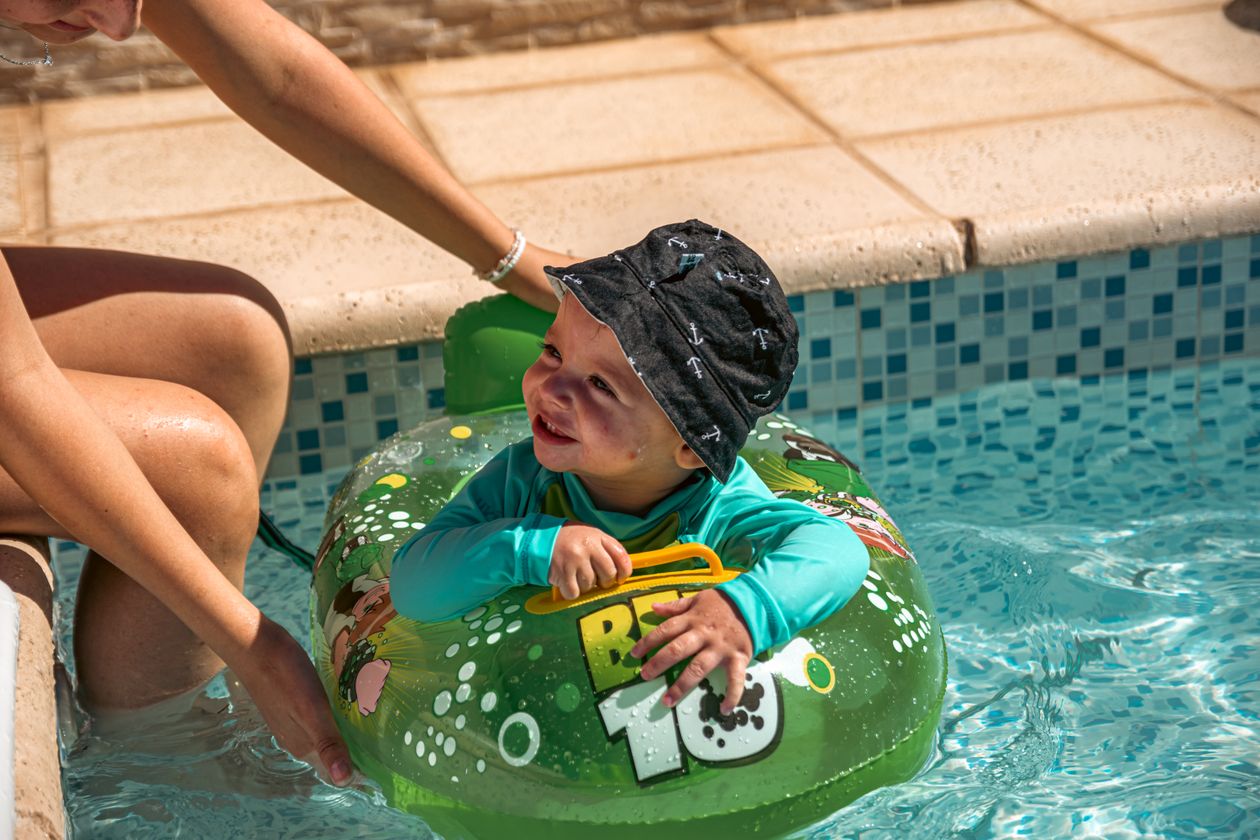
When can babies go in a pool? Many pediatricians suggest waiting until your baby is around 6 months old before taking them into a chlorinated pool, though there is no single official minimum age. By about six months, babies regulate their body temperature better, have stronger head control, and their immune systems are more developed. Before then, short dips in warm, clean water with constant hands-on support are possible, but many parents choose to wait.
Whatever age you start, the most important rule is the same: an adult must stay within arm’s reach, giving touch supervision, at all times. Drowning is a leading cause of death for young children, and it can happen quickly and silently, even in shallow water. Below we cover age guidelines, water temperature, chlorine and skin care, swim diapers, sun safety, swim lessons, and practical tips for a safe, happy first swim.
Quick Answer by Age
This table gives a quick answer to when can babies go in a pool at different stages.
| Age | Pool Guidance | Key Considerations |
|---|---|---|
| 0–2 months | Generally avoid public pools | Immature immune system and temperature control |
| 2–6 months | Brief dips possible in warm, clean water | Keep sessions very short; watch for chills |
| 6–12 months | Common age to start pool visits | Parent-and-baby water classes, 10–30 minutes |
| 12 months+ | Swim lessons can begin | Lessons reduce drowning risk but never replace supervision |
Why Many Parents Wait Until Six Months
Young babies lose body heat quickly, and cool pool water can chill them within minutes. They are also more vulnerable to infections from germs that can live in poorly maintained water. By six months, most babies have better head control, more stable temperature regulation, and have received several rounds of vaccines. That is why the most common answer to when can babies go in a pool is around six months, although your pediatrician can advise based on your baby’s health.
Water Temperature
Babies need warmer water than adults. Aim for a pool temperature of about 84 to 89°F (29 to 32°C) for young babies. Many public pools are cooler than this, so indoor heated pools or dedicated baby pools are often better choices. Watch for signs your baby is cold, such as shivering, blue lips, or fussiness, and get them out, dry, and warm right away. Start with sessions of 10 minutes and gradually build to 20 or 30 minutes as your baby grows.
Chlorine, Skin, and Eyes
Properly treated pool water is generally safe for babies, but chlorine can dry delicate skin. Rinse your baby with fresh water after swimming and apply a gentle, fragrance-free moisturizer. Avoid letting your baby drink pool water, and keep their face above water unless you are in a guided class. Skip swimming if your baby has diarrhea, as this can spread germs to others. Saltwater pools are similar to chlorinated pools and still need the same precautions.
Swim Diapers
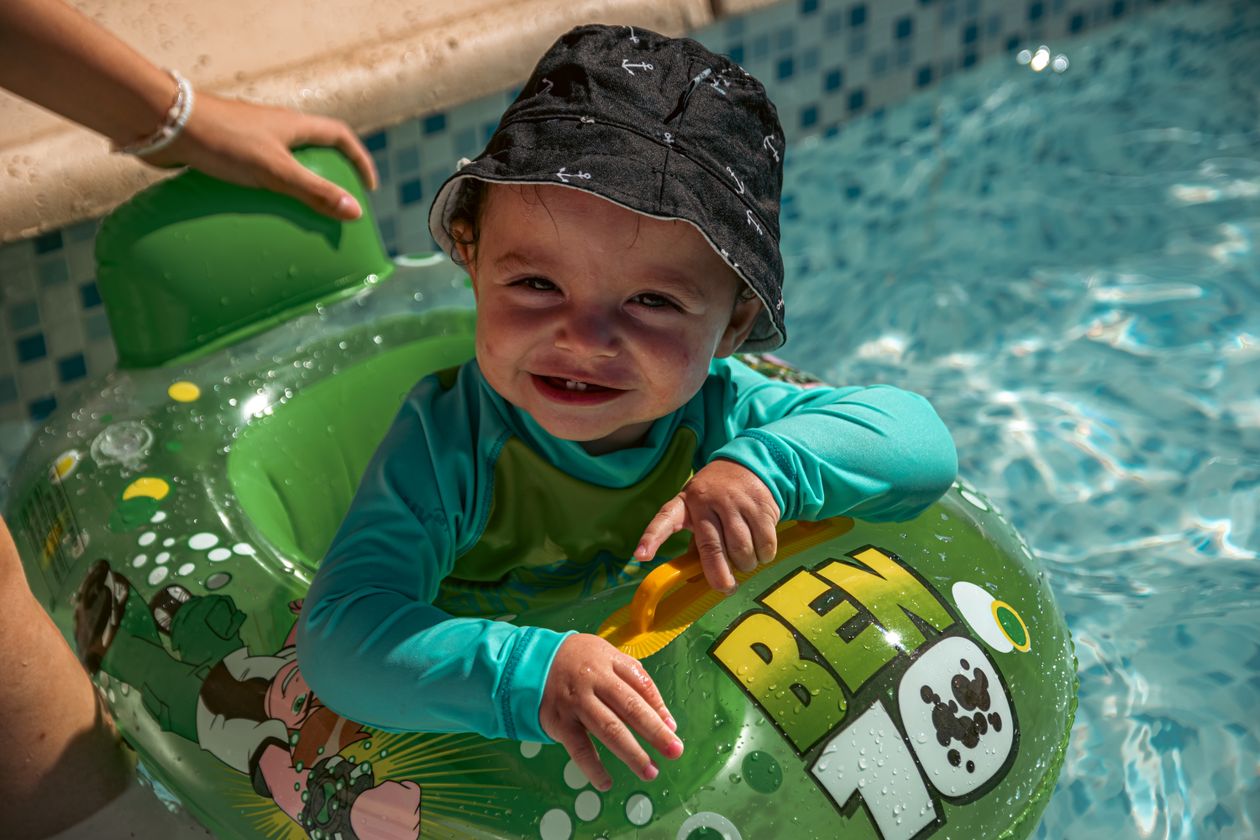
Most public pools require swim diapers for babies and toddlers who are not toilet trained. Regular diapers absorb water, swell, and fall apart, so they should never be used for swimming. Disposable swim diapers and reusable swim diapers are both available, and many pools recommend a reusable swim diaper cover over a disposable one. Change swim diapers in a changing area, not by the pool, and check them often.
Sun Safety
Babies under six months should be kept out of direct sunlight as much as possible. Use shade, a wide-brimmed hat, and lightweight sun-protective clothing. For babies six months and older, apply a broad-spectrum, water-resistant sunscreen with SPF 30 or higher to exposed skin, and reapply after swimming. Outdoor swims in the early morning or late afternoon reduce sun exposure. Sun protection is a major factor when deciding when can babies go in a pool outdoors.
Water Safety Rules
- Use touch supervision: an adult within arm’s reach at all times.
- Never rely on floats or inflatable toys to keep your baby safe.
- Assign a water watcher who is not distracted by phones or conversations.
- Empty kiddie pools and buckets immediately after use.
- Install four-sided fencing with a self-closing, self-latching gate around home pools.
- Learn infant CPR before the swimming season.
The AAP’s water safety guidance for young children explains these layers of protection in detail.
Baby Swim Lessons
Parent-and-baby water classes for babies from around six months focus on comfort in the water, songs, gentle movements, and bonding, rather than true swimming. The AAP notes that swim lessons can begin for many children from age one, and lessons can reduce drowning risk. Remember, though, that no lesson makes a baby “water safe.” Supervision is always essential.
Public Pools, Hotel Pools, and Home Pools
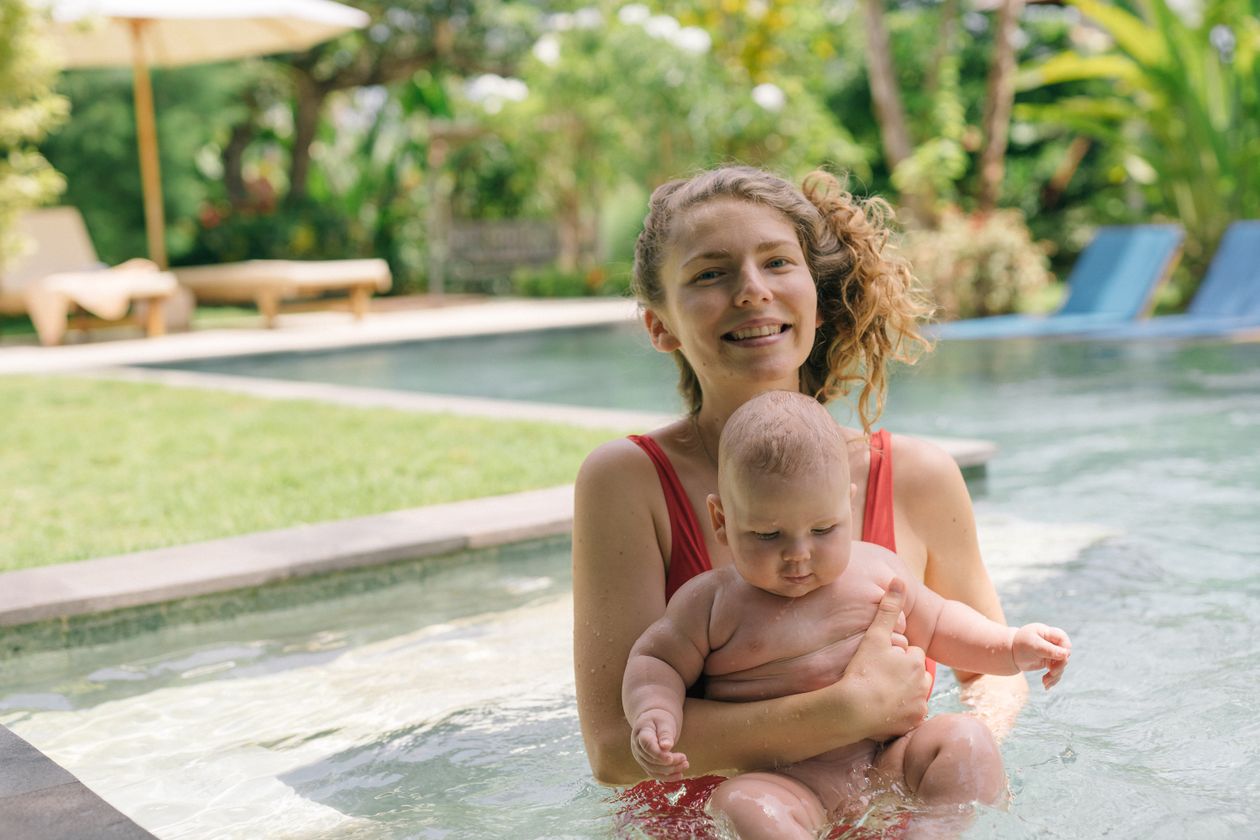
The type of pool affects when can babies go in a pool comfortably. Indoor public pools with dedicated baby or teaching areas are often the warmest and best maintained. Hotel pools vary widely in temperature and cleanliness, so test the water with your hand and look for clear water without a strong chemical smell. Home pools give you control over temperature and timing but come with a major responsibility: four-sided fencing, alarms, and locked gates, because many toddler drownings happen in home pools during moments when no one realizes a child has slipped away.
Kiddie Pools and Splash Pads
Inflatable kiddie pools can be fun for older babies on hot days, but they need the same constant supervision as large pools. Keep the water shallow and warm, change it often to keep it clean, and empty the pool and turn it over as soon as you are done. Splash pads are a great alternative for babies and toddlers because there is no standing water, though you should still stay close and watch for slippery surfaces. These options are a gentle way to explore water play before deciding when can babies go in a pool for a full swim.
Signs Your Baby Has Had Enough
- Shivering or blue lips, which mean your baby is cold.
- Crying or fussiness that does not settle with cuddles.
- Wrinkled fingers and toes after a longer session.
- Tiredness or yawning, especially near nap time.
Ending the session while your baby is still happy builds positive feelings about water for next time, which matters more than the exact age when can babies go in a pool for your family.
What to Pack for the Pool
- Swim diapers plus regular diapers for afterward.
- Hooded towel and a warm change of clothes.
- Sunscreen, hat, and rash guard for outdoor swims.
- Moisturizer for after rinsing.
- Snacks or a feed, since swimming makes babies hungry.
- A waterproof bag for wet items.
A good diaper bag makes pool trips easier; see our guide on whether you need a diaper bag and our picks for the best diaper bag backpacks.
A Practical Scenario: A First Swim at Seven Months
Imagine parents taking their seven-month-old to an indoor heated pool. They choose a quiet time, put on a reusable swim diaper, keep the first session to 15 minutes, and hold their baby close the whole time. Afterward, they rinse, moisturize, and feed her. For them, the honest answer to when can babies go in a pool was seven months, when she was ready and the water was warm.
Shop This Guide
If you decide this gear is right for your family, these links show current options and prices. Check reviews, age and weight limits, and recall status before you buy.
As an Amazon Associate, we earn from qualifying purchases at no extra cost to you.
Frequently Asked Questions
When can babies go in a pool for the first time?
Many parents wait until around six months, though brief dips in warm water can happen earlier.
Can newborns go in a pool?
It is generally best to avoid public pools with newborns because of temperature and infection risks.
Is chlorine harmful to babies?
Properly maintained pools are generally safe; rinse and moisturize afterward.
How long can a baby stay in a pool?
Start with about 10 minutes and build to around 30 minutes, getting out sooner if they seem cold.
Final Thoughts: When Can Babies Go in a Pool?
When can babies go in a pool? Many parents start around six months, when babies handle temperature changes better and have stronger head control. Choose warm, clean water, keep early sessions short, use swim diapers and sun protection, and always provide touch supervision. Start swim lessons around age one if you wish, and remember that lessons never replace close adult attention.
Sources & Expert References
- American Academy of Pediatrics (HealthyChildren.org)
- CDC Child Safety & Injury Prevention
- CPSC Nursery Product Safety
- Before you buy: Check the current recall list at CPSC.gov/Recalls, especially for secondhand or older gear.

About the Author
TheBabyGearList Team
TheBabyGearList is an independent baby-gear site. We put each guide together from manufacturer specifications, safety standards and guidance (AAP, CPSC, NHTSA and JPMA), and patterns in verified buyer reviews. We use AI writing tools to help draft guides and review every guide before it goes live. We have not hands-on tested every product we mention, so please check the manufacturer's current instructions and limits before you buy or use any gear, and talk to your pediatrician about health questions. Spotted something out of date? Tell us through the Contact page.