- The Developmental Signs That Matter Most
- A Quick Timeline by Age
- What Your Stroller Manual Says Comes First
- Why Parent-Facing Is Better for Young Babies
- How to Make the Switch Smoothly
- Safety Checks Before Every Walk
- What About Travel Systems and Car Seats?
- A Practical Scenario: Deciding for Your Own Baby
- Shop This Guide
- Frequently Asked Questions
- Final Thoughts: When Can a Baby Face Forward in a Stroller?
- Free Newborn Gear Checklist
- Everything you need before baby arrives — get the free printable checklist, straight to your inbox.
As an Amazon Associate, we earn from qualifying purchases linked in this post.
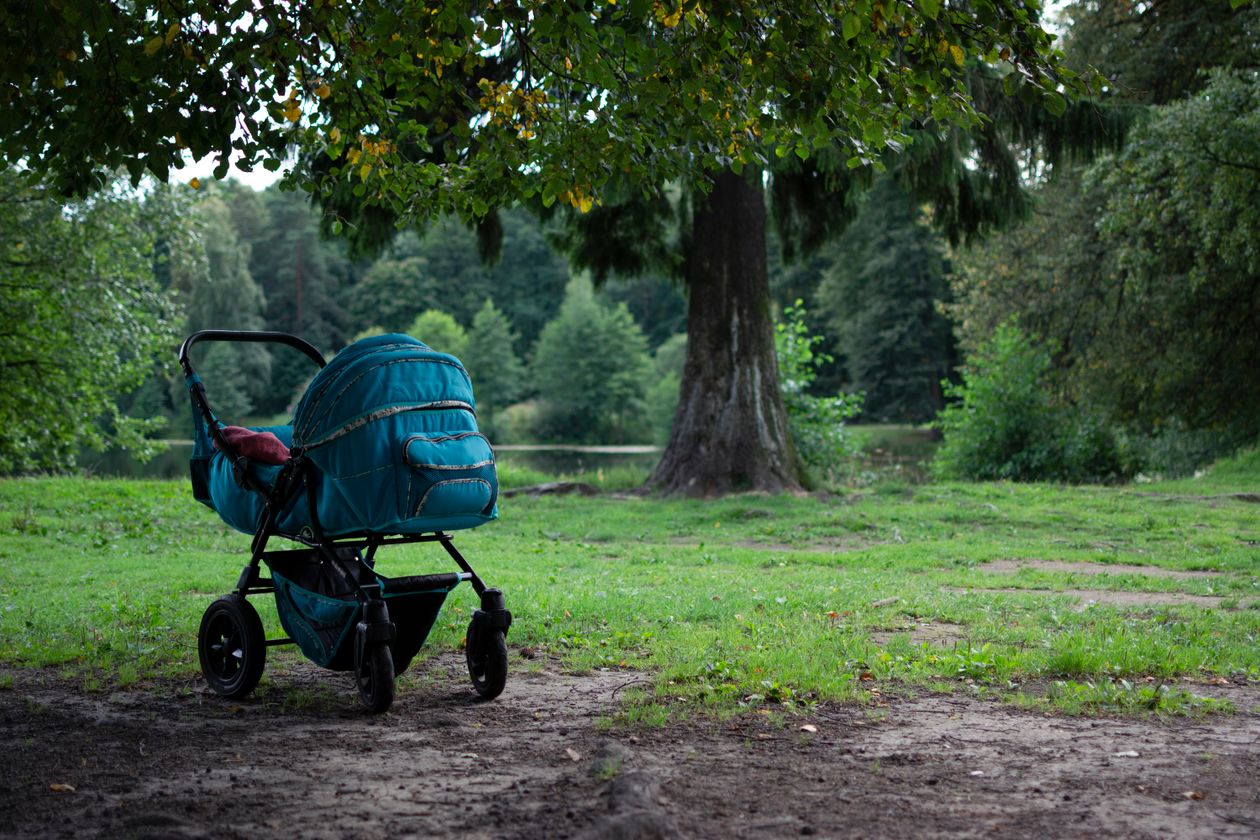
When can a baby face forward in a stroller? Most babies are ready to ride forward-facing in an upright stroller seat at around 6 months, once they have steady head and neck control and can sit with only a little support. Before that point, newborns and young infants should ride lying flat or nearly flat, either in a bassinet attachment, a fully reclined seat, or an infant car seat clicked into the stroller frame.
Six months is a guideline rather than a deadline. Some babies are ready a little earlier, others a little later, and many families keep their child parent-facing well past the first birthday simply because they enjoy the eye contact. Here is how to tell when your baby is ready, what the stroller manual has to do with it, and how to make the switch smoothly.
The Developmental Signs That Matter Most
Age is a useful shorthand, but readiness is really about your baby’s body. Look for these signs before turning the seat around:
- Solid head control: your baby holds their head steady without bobbing, even when the stroller rolls over a bump.
- Supported sitting: they can sit upright with a little help, such as in a high chair or on your lap, without slumping forward.
- Interest in the world: they twist and crane their neck to see what is going on around them.
- Comfort in an upright position: they do not fuss or slide down when the seat is set more upright.
The American Academy of Pediatrics describes how sitting and head control typically develop between four and seven months in its overview of baby movement milestones. If your baby is not showing these signs by around seven months, mention it at your next checkup, since every child develops on a slightly different schedule.
A Quick Timeline by Age
This table gives a rough sense of when can a baby face forward in a stroller at each stage, and which setup fits best in the meantime.
| Age | Typical Stroller Setup | Direction |
|---|---|---|
| 0–3 months | Bassinet, fully flat seat, or infant car seat travel system | Parent-facing |
| 3–6 months | Deep recline or car seat; brief semi-upright time if head control is strong | Parent-facing |
| 6–9 months | Upright toddler seat with five-point harness | Either; forward-facing becomes an option |
| 9 months + | Upright seat, optional recline for naps | Whichever your child prefers |
What Your Stroller Manual Says Comes First
Every stroller has its own rules, and they override any general advice. Some seats can face both ways from birth when fully reclined; others are designed to face forward only once your baby can sit up. Check the manual for the minimum age or weight for the upright seat and for forward-facing mode. If you have lost the manual, most manufacturers post a PDF on their website. Following the manual is the most reliable way to answer when can a baby face forward in a stroller for your specific model.
If you are still choosing a stroller, it is worth looking for a reversible seat. That flexibility lets you decide the direction day by day instead of being locked in. Our guide to the best baby strollers notes which models have reversible seats and full-flat recline.
Why Parent-Facing Is Better for Young Babies
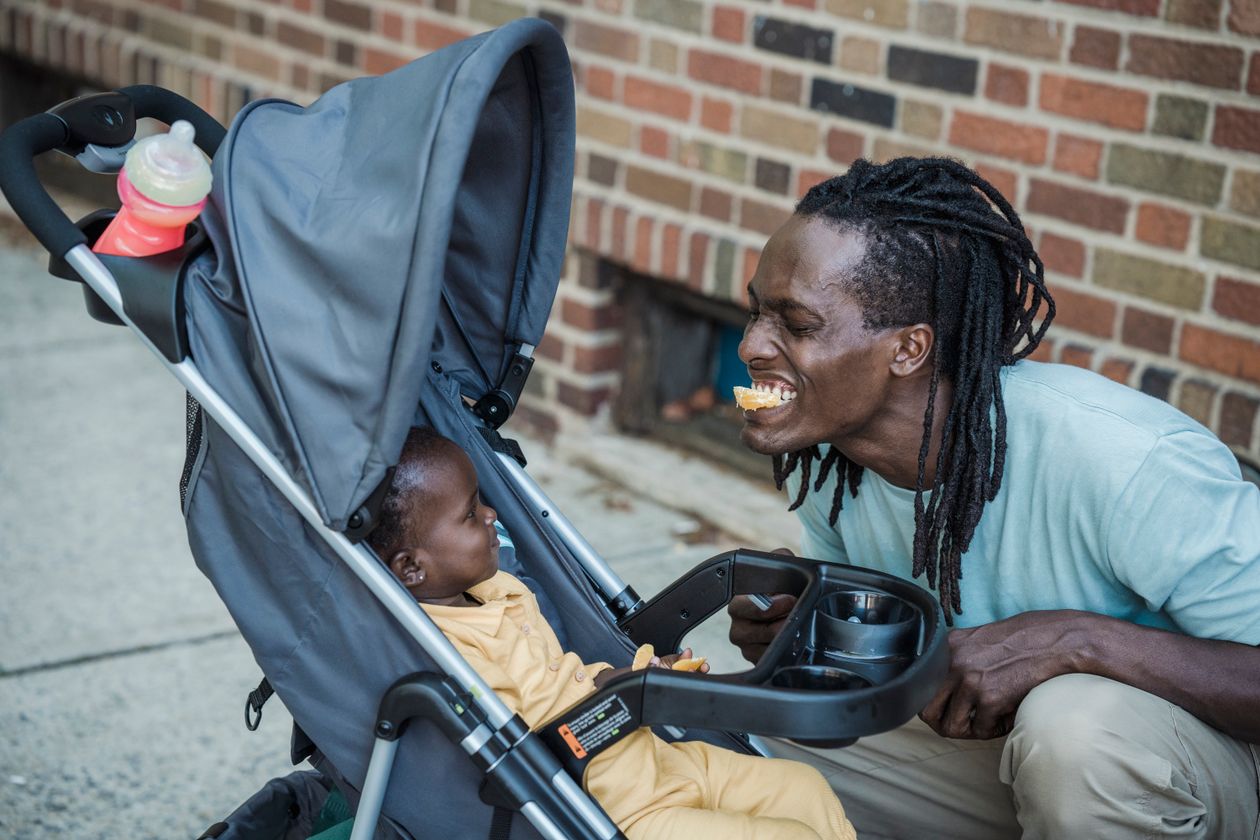
For the first several months, keeping your baby parent-facing has real advantages. You can see whether they are too warm, too cold, hungry, or ready for a nap. Babies also find their caregiver’s face reassuring, and lots of eye contact and chatting during walks supports early language development.
Young babies can also become overstimulated more easily. Facing forward into traffic, crowds, wind, and bright sun can be a lot to take in. That is part of why the honest answer to when can a baby face forward in a stroller is “when they are physically ready and seem to enjoy it,” not simply the first day they turn six months old.
How to Make the Switch Smoothly
Once you have worked out when can a baby face forward in a stroller for your own child, turning the seat around is easy mechanically, but some babies need time to adjust. These steps help:
- Start with short walks. Try forward-facing for ten or fifteen minutes in a calm setting, like a quiet park, before a long trip through a busy area.
- Pick a good time. Make the switch when your baby is fed and well rested, not right before a nap.
- Use the canopy. A forward-facing baby gets more direct sun and wind, so extend the canopy and dress them for the weather.
- Talk to them anyway. Even when they cannot see you, narrating what you see keeps the walk interactive.
- Watch their cues. If they fuss, rub their eyes, or turn away, switch back. There is no rule saying you must stay forward-facing once you start.
Safety Checks Before Every Walk
Whichever way the seat faces, a few habits keep your child safe. Always buckle the full five-point harness, even for a quick trip, and adjust the straps so they lie flat and snug. Lock the brake whenever you stop. Never hang heavy bags on the handlebar, since that can tip the stroller backward when your child climbs out. Finally, check that the seat clicks fully into place after you reverse it; a seat that is not locked can shift unexpectedly.
These checks matter just as much as the question of when can a baby face forward in a stroller, because a correctly buckled baby is safe in either direction.
What About Travel Systems and Car Seats?
Many families use an infant car seat clipped into a stroller frame for the first months. In that setup, the car seat usually faces you, and that is exactly how it should be. Once your baby outgrows the infant car seat or is ready for the toddler seat, you will move to the stroller’s own seat and can start asking when can a baby face forward in a stroller. Remember that car seat rules are a separate matter: in the car, rear-facing is recommended for as long as possible. If you are weighing seat options, our comparison of convertible vs infant car seats explains how the stages fit together.
A Practical Scenario: Deciding for Your Own Baby
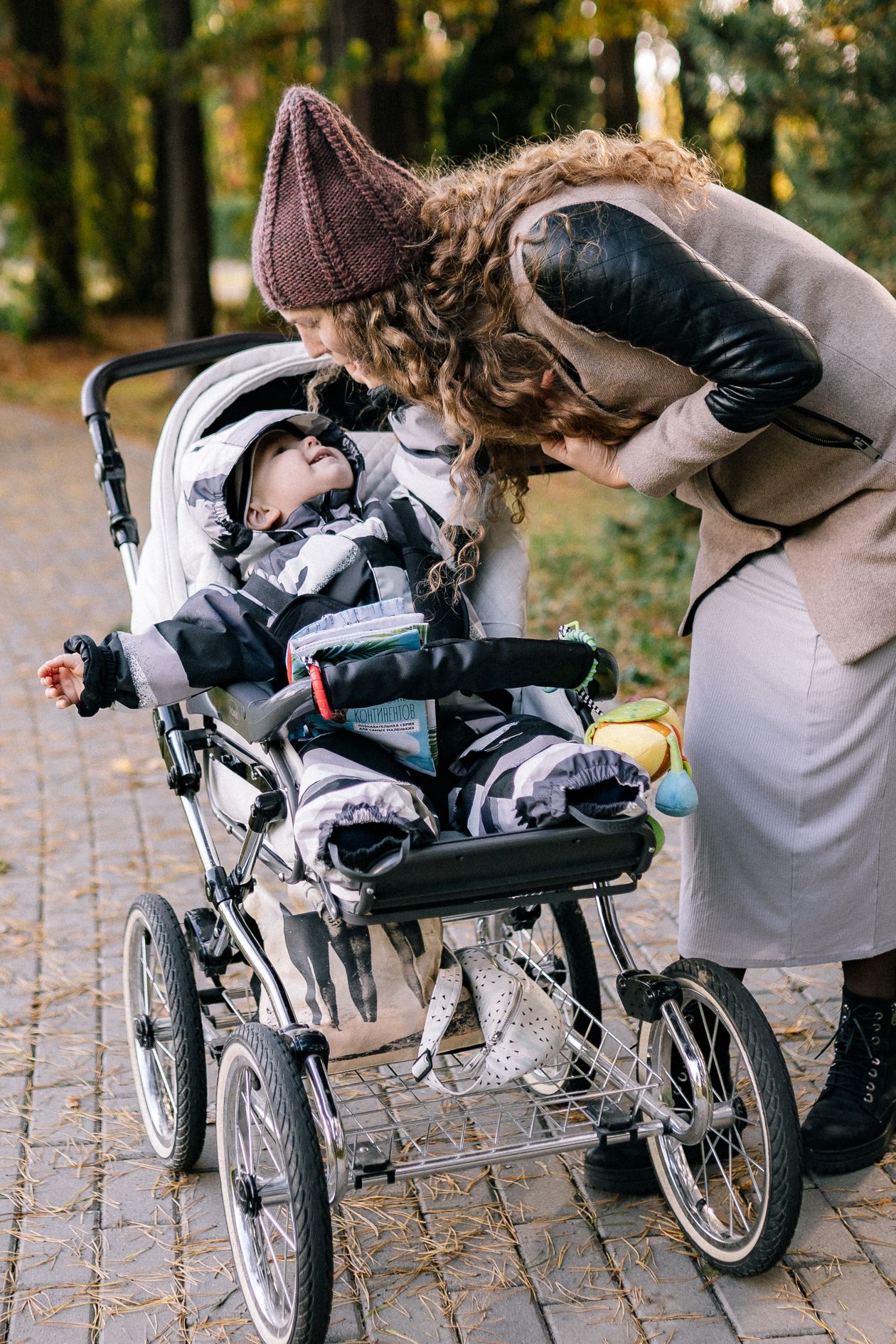
Imagine a seven-month-old who sits well in a high chair, holds their head steady, and keeps twisting around in the parent-facing seat to look at passing dogs. That baby is very likely ready. A good next step would be a short forward-facing walk on a calm afternoon, with the canopy up. If the baby is happy, the family can use forward-facing for daytime outings and switch back to parent-facing for evening walks when the baby is sleepy.
Now imagine a five-month-old who still slumps when sitting and gets fussy in busy places. For that baby, waiting a few more weeks is the better call. In both cases, the answer to when can a baby face forward in a stroller comes from watching the child, not the calendar.
Shop This Guide
If you decide this gear is right for your family, these links show current options and prices. Check reviews, age and weight limits, and recall status before you buy.
Want our tested picks? Read our guide to the best baby stroller.
As an Amazon Associate, we earn from qualifying purchases at no extra cost to you.
Frequently Asked Questions
When can a baby face forward in a stroller if they were born early?
For babies born prematurely, many pediatricians suggest using their adjusted age, counting from the original due date, when thinking about physical milestones. Check with your pediatrician if you are unsure.
Can a 4-month-old face forward in a stroller?
Some strong 4-month-olds have good head control, but most are not yet ready to sit upright for long. A reclined, parent-facing position is usually more comfortable and safer at that age.
Is forward-facing bad for babies?
No. Once a baby is physically ready, forward-facing is perfectly fine. The main thing to watch for is overstimulation, so keep an eye on their mood and switch back if needed.
How long can a baby stay parent-facing?
As long as you both like it, within the stroller’s weight limit. Many toddlers still enjoy facing their parent, especially when tired.
Do umbrella strollers work for young babies?
Most lightweight umbrella strollers do not recline fully and are designed for babies who can already sit up, so they are generally best from about six months onward. Always check the manufacturer’s minimum age.
Final Thoughts: When Can a Baby Face Forward in a Stroller?
When can a baby face forward in a stroller? Usually around six months, once your baby has solid head control, can sit with light support, and shows interest in the world around them. Until then, keep them lying flat or reclined and facing you. Read your stroller’s manual, start with short and calm outings, and let your baby’s mood guide you. There is no prize for switching early, and many happy toddlers ride parent-facing for a long time.
Sources & Expert References
- American Academy of Pediatrics (HealthyChildren.org)
- CDC Child Safety & Injury Prevention
- CPSC Nursery Product Safety
- Before you buy: Check the current recall list at CPSC.gov/Recalls, especially for secondhand or older gear.

About the Author
Sarah Bennett
Sarah Bennett runs product testing for TheBabyGearList. She has three kids of her own (ages 7, 4, and 1), which means she has bought, returned, and worn out more strollers, car seats, and baby monitors than she can count. Every review on this site starts from a real comparison: she buys or borrows the top options in a category, uses them for at least two weeks with her own kids, and writes down the specific things that broke, annoyed her, or worked better than expected. Before this she spent four years as a product safety reviewer for a parenting magazine, checking car seat and crib listings against CPSC recall data. She lists the cheapest option that actually holds up first, and skips products she wouldn't put her own kids in.